
BAU 2019 — Munich, January 14–19
The World's Leading Trade Fair for Construction
Can a trade fair be more diverse than BAU? Over 200,000 square metres covering architecture, materials and building systems. Power tools next to sanitary systems. High-tech concrete next to smart glass. The 2019 edition drew over 250,000 visitors from 150 countries and featured 2,250 exhibitors (source: Messe München). The global construction market was valued at $10.6 trillion in 2019 (source: GlobalData).
At Entwurfreich, building technology is a core area. We design sliding door controllers for Schüco, switch systems for Busch-Jaeger and smart home interfaces for ABB. We attend fairs across industries — from ISH in Frankfurt to Salone del Mobile in Milan. This ZOOM-IN Trendreport captures the key findings from BAU 2019.
Five Key Trends at BAU 2019
1. How Are Smart Building Systems Changing Architecture?
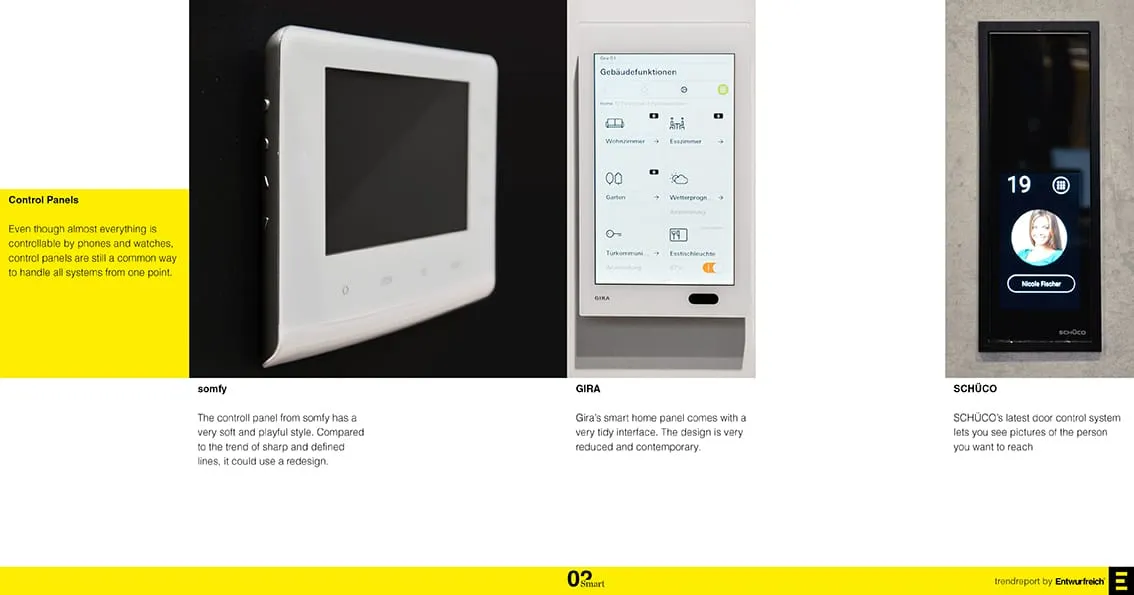
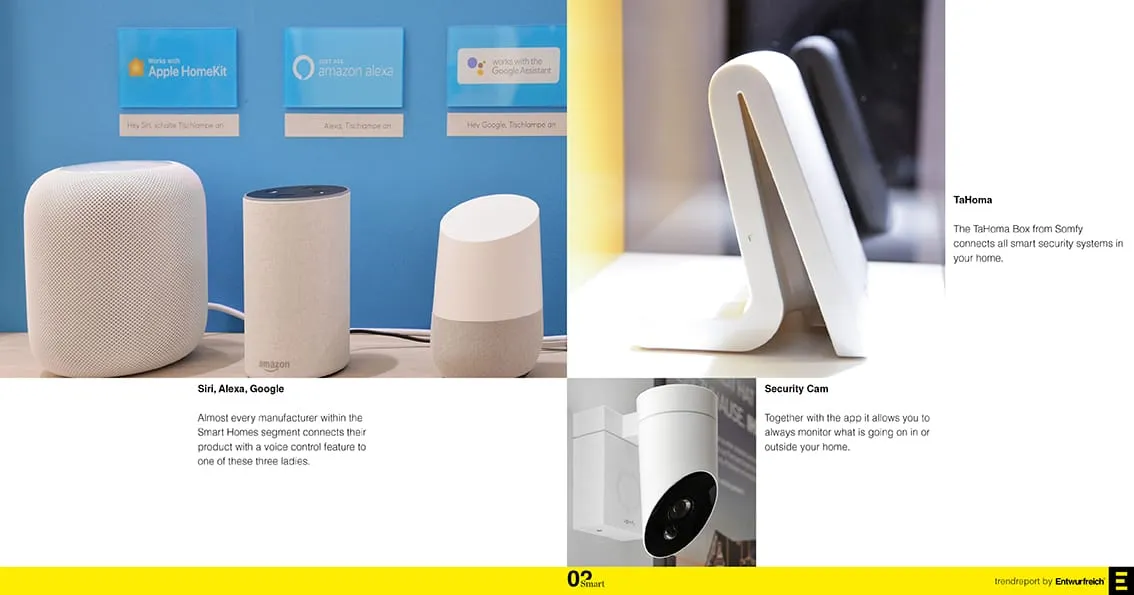
Smart buildings were the dominant theme at BAU 2019. Sensors, actuators and IoT platforms connect lighting, heating, ventilation, shading and access control into unified systems. Buildings learn from occupancy patterns and adjust in real time.
Busch-Jaeger — one of our interview partners — showed their smart home ecosystem built around the KNX standard. Schüco presented intelligent facade systems that adjust shading based on sun position and indoor temperature. The global smart building market was valued at $60.7 billion in 2019 (source: MarketsandMarkets).
For product designers, smart buildings change the brief. A light switch is no longer a simple on/off device. It is a node in a building-wide network. The interface must serve both the installer and the end user — a dual audience with very different needs.
2. How Is Sustainability Transforming Construction Materials?
Sustainability was everywhere at BAU 2019. The construction industry accounts for roughly 38% of global CO2 emissions (source: UN Environment Programme). Pressure to change is immense.
Exhibitors showed recycled concrete aggregates, cross-laminated timber (CLT) for high-rise construction, bio-based insulation and low-carbon cement alternatives. Timber engineering was a standout: wooden buildings of 10+ storeys were presented as viable alternatives to steel and concrete frames. Cradle-to-cradle certification was a recurring theme.
For designers working on building products, material choices now start with carbon footprint. We explored this broader topic in our article on sustainable design principles.
3. How Are Digital Tools Changing the Construction Site?
Digital tools are moving from the office to the construction site. At BAU 2019, Building Information Modelling (BIM) was no longer optional — it was expected. 3D laser scanning, drone surveys and augmented reality overlays were shown by dozens of exhibitors.
Leica Geosystems — one of our interview partners — presented handheld 3D scanners that capture building geometry in minutes. The data feeds directly into BIM models. AR glasses overlay digital plans onto the physical site, letting workers see pipes behind walls before drilling.
The global BIM market was valued at $5.4 billion in 2019, projected to reach $15.0 billion by 2028 (source: MarketsandMarkets). For industrial designers, this means designing for tough environments. Dust, vibration, gloves, bright sunlight. The interface must work without a learning curve — because on a construction site, nobody reads a manual.
4. Why Is Modular Construction Growing So Fast?
Modular and prefabricated building was one of the fastest-growing segments at BAU 2019. Factory-made modules — complete with wiring, plumbing and finishes — are transported to the site and assembled in days instead of months.
The global modular construction market was valued at $82 billion in 2019, projected to reach $130 billion by 2025 (source: Allied Market Research). The drivers: labour shortages, speed, quality control and waste reduction. A factory-built module produces up to 90% less waste than traditional on-site construction.
For product designers, modular building creates new requirements. Components must fit precise tolerances. Connections must be standardised. And every product must survive transport — a challenge that site-built products never face.
5. How Is Facade Technology Evolving?
Facades are no longer just walls. At BAU 2019, they became active building systems. Adaptive glass that changes transparency with sunlight. Integrated photovoltaic panels that generate energy. Kinetic shading elements that move with wind and temperature.
Schüco — another interview partner — showed facade systems with built-in ventilation and climate control. The facade becomes the building's skin: it breathes, regulates temperature and produces energy. The global facade market was valued at $263 billion in 2019 (source: Grand View Research).
For designers, facade products require a unique skill set. They must perform structurally, thermally and aesthetically — while withstanding decades of weather exposure. The tolerance for error is zero.
Interviews: Insights from Industry Leaders
Thomas Grabher — Leica Geosystems
Leica Geosystems develops precision measurement and surveying technology. Grabher discussed how 3D scanning and BIM are transforming the construction workflow. His view: the construction site of the future is digital-first. Every measurement, every change, every inspection will be captured in a live 3D model.
Thomas Hardenacke — Busch-Jaeger
Busch-Jaeger is one of Germany's leading manufacturers of electrical installation systems. Hardenacke spoke about the evolution of the light switch — from mechanical toggle to smart home hub. His point: the switch is the most intimate touchpoint between a building and its user. Design matters here more than anywhere.
Thomas Lauritzen & Alexander Hertel — Schüco
Schüco develops window, door and facade systems for commercial and residential buildings. Lauritzen and Hertel discussed how facades are becoming active climate systems. Their take: a modern facade does not just protect — it regulates, generates and communicates. The design of these systems requires architects, engineers and industrial designers to work as one team.
These three perspectives reflect the breadth of BAU: from precision measurement to smart interfaces to building envelopes.
Report Preview
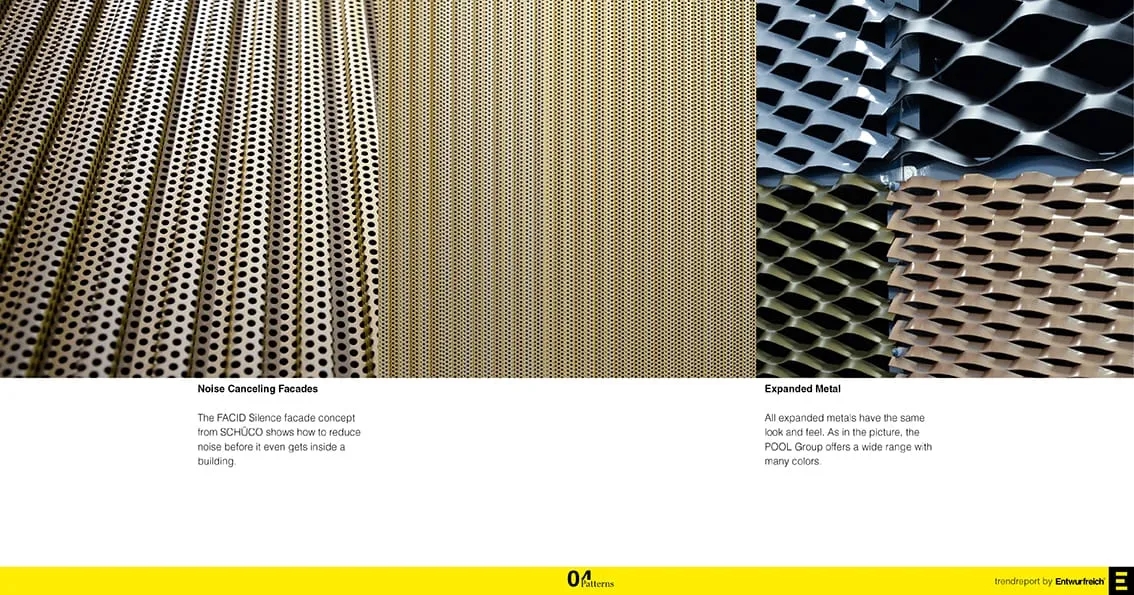
Our ZOOM-IN Trendreport captures the visual essence of BAU 2019. It covers all 18 halls at Messe München — from architecture and structural engineering to building automation and interior finishes. The full report includes trend analyses with over 80 original photos, our Hot or Not feature, and complete interviews with Leica Geosystems, Busch-Jaeger and Schüco.
Why It Matters for Product Design
The trends from BAU 2019 go beyond construction. Smart systems, sustainable materials, digital workflows and modular thinking are forces that shape product design across industries. At Entwurfreich, building technology is one of our core sectors — from switch design to facade components to industrial design for the built environment.
Our ZOOM-IN Trendreports turn these findings into clear insights for designers, product managers and decision-makers. Each report combines on-site photos, expert interviews and trend analysis in a compact format. Whether you are designing a building component, an automation system or an interior product, the macro trends from BAU can give you a real edge.
How These Trends Have Evolved Since 2019
Editor's note (2026): The five trends from BAU 2019 have reshaped the industry.
Smart buildings: KNX and Matter protocols now enable cross-brand interoperability. Smart building systems are standard in new commercial construction.
Sustainable materials: EU regulations now mandate whole-life carbon assessments. Timber high-rises are built across Scandinavia, Austria and Germany. Recycled concrete is entering mainstream production.
Digital tools: BIM is mandatory for public projects in many EU countries. 3D scanning costs have dropped by 60%. AR on construction sites is moving from pilot to standard.
Modular construction: Labour shortages have accelerated adoption. Factory-built modules now account for 10%+ of new housing in several European markets.
Facade innovation: Building-integrated photovoltaics (BIPV) are commercially viable. Adaptive facades are installed in landmark projects worldwide.
Entwurfreich tracks these shifts through our ZOOM-IN reports and project work in building technology, smart home interfaces and sustainable design.
Selected Projects
Frequently Asked Questions
What is BAU Munich?
BAU is the world's leading trade fair for architecture, materials and building systems. It takes place biennially at Messe München in Munich, Germany. The 2019 edition drew over 250,000 visitors from 150 countries and featured 2,250 exhibitors across more than 200,000 square metres (source: Messe München). BAU covers the full spectrum of construction: from structural engineering and facade systems to interior finishes, building automation and power tools. It is the key meeting point for architects, planners, manufacturers and designers in the construction industry.
What were the main trends at BAU 2019?
Five trends stood out. (1) Smart building systems connecting lighting, heating, shading and access control via IoT and KNX — a $60.7 billion market in 2019. (2) Sustainable construction with recycled concrete, CLT timber and low-carbon cement — the sector accounts for 38% of global CO2. (3) Digital planning tools including BIM, 3D laser scanning and AR on the construction site. (4) Modular and prefabricated building, producing 90% less waste than traditional methods — an $82 billion market. (5) Facade innovation with adaptive glass, integrated photovoltaics and kinetic shading — a $263 billion market.
Who is Entwurfreich?
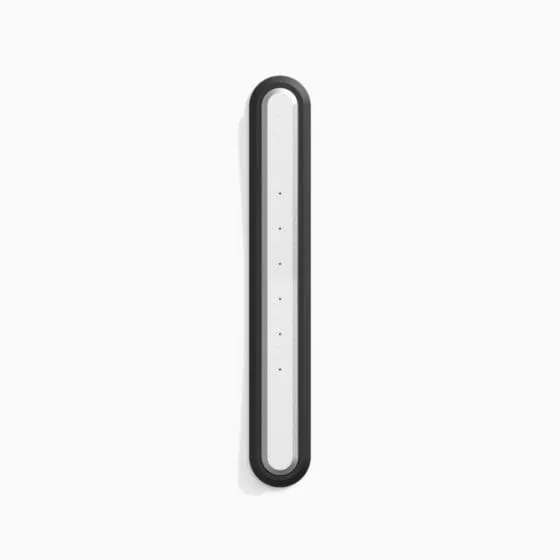
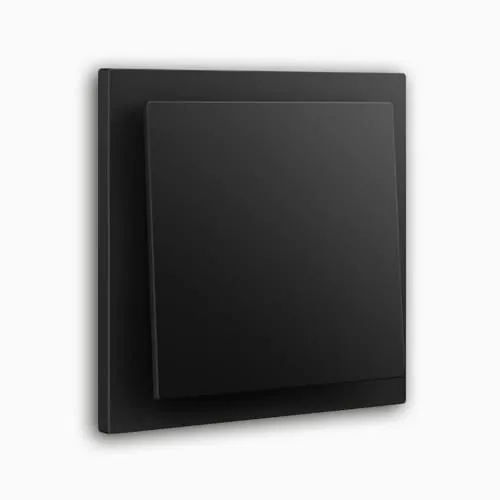
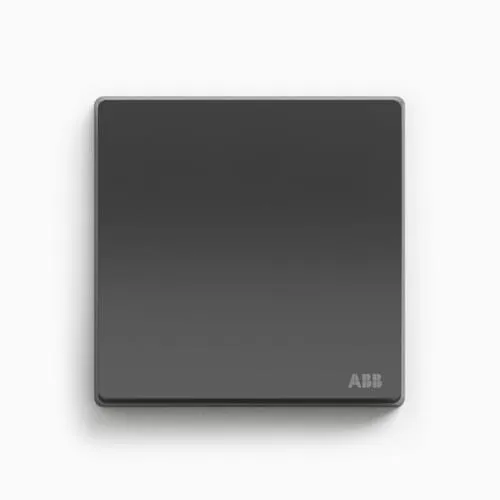
Entwurfreich is an industrial design agency in Düsseldorf, Germany. Founded in 2012, the team has done over 350 projects for 125+ clients including ABB, Vodafone, Henkel, Coca-Cola, Fujifilm and Covestro. Building technology is a core sector — projects include the Schüco TipTronic sliding door controller, the Busch-art linear switch system and the ABB Xuan Zhi switch series. The ZOOM-IN Trendreports cover trends from fairs like BAU, ISH, MEDICA, IFA, Eurobike and Salone del Mobile. Recent awards: iF Design Award Gold 2024, Red Dot Best of the Best 2024, German Design Award Gold 2026. Learn more about our design process.
Written by Matthias Menzel · February 20, 2019