

A Strategic Guide for Product Managers and Business Leaders
Sustainable Design Is a Growth Opportunity
Why Now? New Rules Create New Opportunities
The EU Ecodesign for Sustainable Products Regulation (ESPR) entered into force on 18 July 2024 (source: European Commission). It changes the rules for every physical product sold in Europe.
From 2026, the first product groups — iron, steel, textiles, batteries — must carry a Digital Product Passport (DPP). By 2030, the requirement expands to 11 categories including furniture, electronics and chemicals. The DPP is a digital record attached to each product via QR code or NFC chip. It contains data on materials, origin, repairability, energy consumption and end-of-life options.
From 19 July 2026, the destruction of unsold consumer products is banned for large companies. Mid-sized companies follow in 2030.
The good news: companies that prepare now will not just comply — they will lead. Early movers gain brand trust, customer loyalty and access to the growing market of sustainability-conscious buyers.
What Is the Business Case for Sustainable Design?
The numbers are clear. Companies that adopt circular business models see average profit margin increases of 23% within the first three years (source: Bain & Company). Consumer goods companies replacing virgin materials with recycled alternatives save an average of $2.8 million per $100 million in revenue (source: Ellen MacArthur Foundation).
Sustainability-marketed products grow 5.6x faster than conventional ones and deliver 55% of total consumer goods growth (source: NYU Stern Sustainable Market Share Index).
On the demand side, 80% of shoppers are willing to pay roughly 10% more for sustainable products, even during inflation (source: PwC 2024). Companies with diversified material sources — including recycled content — experienced 63% less supply chain disruption during 2023-2024 geopolitical events.
The global circular economy market was valued at $517 billion in 2025, projected to reach $798 billion by 2029. This is not a niche. It is the fastest-growing segment in industrial production.
What Does Sustainable Design Actually Mean?
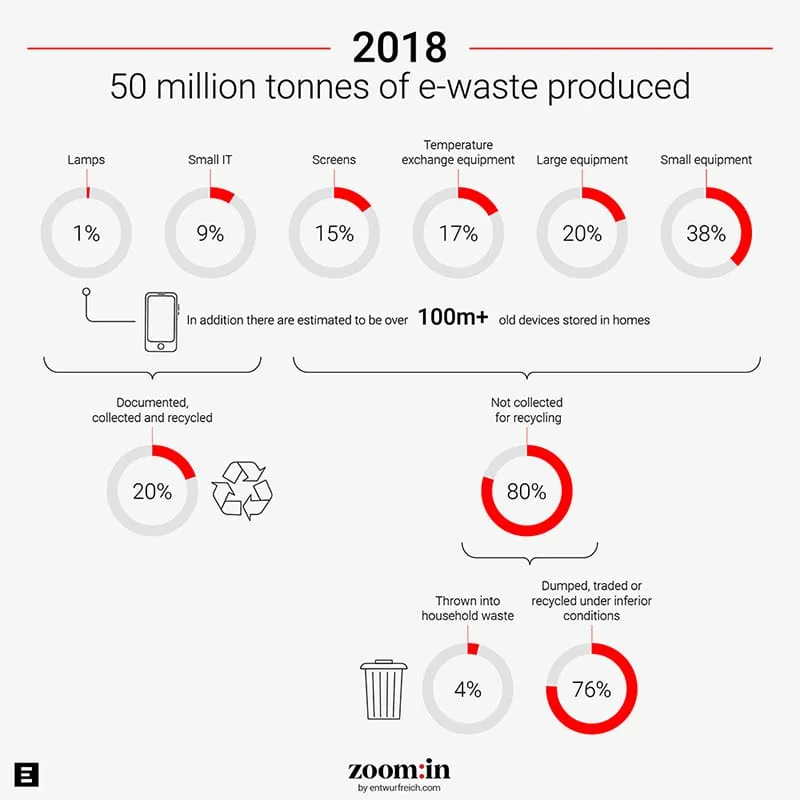
At its core, sustainable design is a way of thinking about products as a closed loop. From raw material to manufacturing to use to end-of-life — and back again. It asks three questions at every stage:
- What materials are used — and where do they come from?
- How long will the product last — and can it be repaired?
- What happens at end-of-life — can it be recycled, reused or composted?
The opposite is planned obsolescence: designing products so that the entire unit must be replaced when one part fails. This model generates short-term revenue but creates long-term costs — for the company (warranty, reputation) and for society (waste, pollution).
How Do Regulations Differ Across Markets?
Sustainable design is a global topic, but the regulatory landscape varies dramatically. For product managers at international companies, one product may need to meet four different frameworks.
What does the ESPR mean for EU manufacturers?
The ESPR is the most comprehensive framework. Digital product passports, mandatory repairability scores, destruction bans and whole-life carbon assessments are becoming law between 2026 and 2030. Companies selling into the EU — regardless of where they manufacture — must comply.
How does Germany lead on circular economy?
Germany pushed for Leichtbau (lightweight construction) as a dedicated ESPR parameter during EU negotiations. The Kreislaufwirtschaftsgesetz (Circular Economy Act) already requires extended producer responsibility. The Umweltbundesamt is leading implementation. For German manufacturers, ESPR is not new — it extends existing obligations.
What sustainability incentives exist in the USA?
The regulatory picture has shifted. The SEC backed away from its climate disclosure rules in March 2025. However, the Inflation Reduction Act (IRA) provides billions in incentives for green manufacturing, recycled materials and domestic clean energy. The US approach is carrots, not sticks — but the financial rewards are substantial.
How does China's Circular Economy Law affect exporters?
China legislated its Circular Economy Promotion Law in 2008 — one of the first countries to do so. The Dual Carbon targets (peak emissions by 2030, carbon neutrality by 2060) drive massive investment in green manufacturing. Chinese companies exporting to Europe must comply with ESPR — making sustainability a trade access requirement.
Five Levers for Product Managers
Sustainable design is not a single decision. It is a set of choices across the product lifecycle. Here are five levers that product managers and business leaders can use today.
1. How does material selection reduce impact?
Start with the end. Choose materials that can be recycled, composted or safely incinerated. Avoid material mixes that cannot be separated. Mono-material designs are easier to recycle. Bio-based plastics, recycled metals and FSC-certified wood are now available at scale.
2. Why does modular architecture matter?
Design products so that components can be replaced, upgraded or swapped without discarding the whole unit. Fairphone proved this works in consumer electronics. The same principle applies to industrial products, medical devices and building components.
3. How does longevity halve environmental cost?
A product that lasts twice as long halves its environmental impact. This means better materials, robust construction and timeless aesthetics. It also means providing repair documentation and spare parts — which the ESPR will require.
4. What is DPP readiness and why start now?
Start collecting the data now. The Digital Product Passport requires information on materials, manufacturing, carbon footprint and recyclability. Companies that build data infrastructure early will comply faster and at lower cost.
5. How does end-of-life planning create value?
Design for disassembly. Use snap-fits instead of glued joints. Mark materials for sorting. Consider take-back programmes. The ESPR destruction ban means unsold products need a second-life pathway. Companies that plan for this turn waste into a revenue stream.
Companies Getting It Right
Fairphone builds smartphones you can repair yourself. Battery, screen, cameras, speakers — all replaceable. Twelve screws hold the phone together. Parts are available online. This is not a niche product — it is a proof of concept that modular consumer electronics work at scale.
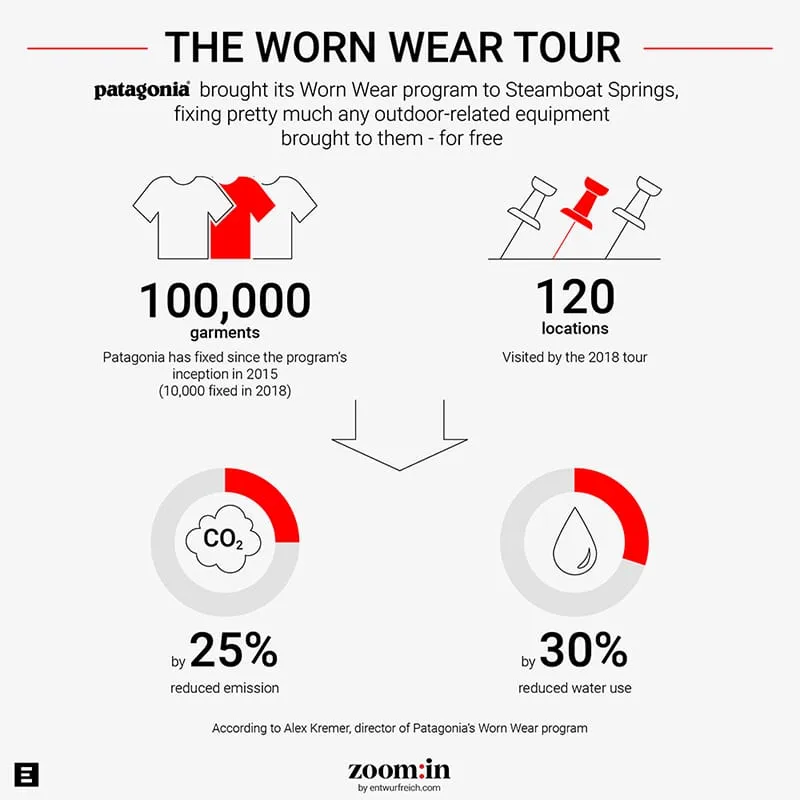
Patagonia runs Worn Wear events where customers bring products for free repair. Broken zippers, torn fabrics, lost buttons — all fixed on site. They buy back used items for resale. Over 100,000 garments repaired, CO2 reduced by 25%, water use down 30%. Fast fashion is a major climate driver. Patagonia shows the alternative.
Interface — the world's largest carpet tile manufacturer — redesigned its entire business around circular principles. Their Mission Zero programme eliminated the company's environmental footprint. They now manufacture carpet tiles from recycled fishing nets and use carbon-negative materials. Revenue grew while impact shrank.
Bosch integrates lifecycle assessment into product development from day one. Their power tools are designed for repair and recycling. Material passports track every component. This is the standard that the ESPR will eventually require from every manufacturer.
What Can an Industrial Design Agency Contribute?
Sustainable design is not just about material choices. It is a strategic design challenge that touches form, function, manufacturing, user behaviour and business model.
As an industrial design agency, Entwurfreich works at this intersection. We help companies translate sustainability goals into tangible products — not just strategy decks. Our process covers material research, concept development, DfE (Design for Environment) analysis and production-ready CAD data.
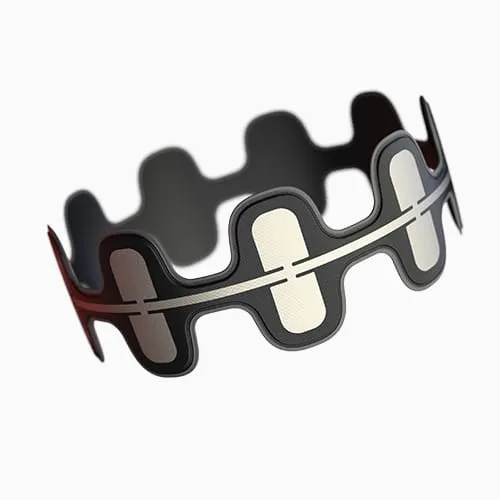
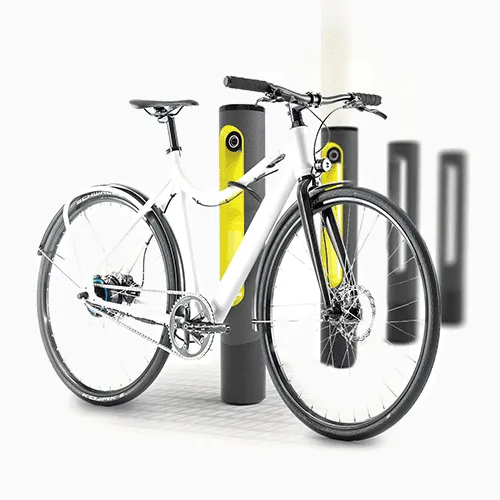
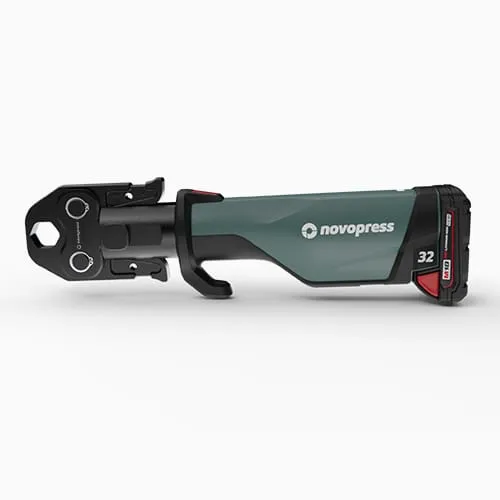
Projects like our smart textile antenna with RWTH Aachen, the SMARTPOLE charging station and the Novopress pressing tool show how sustainable thinking shapes real products.
Through the go-inno programme, eligible SMEs can receive up to 50% public funding on our consulting services — making sustainable product development significantly more affordable.
Selected Projects
Frequently Asked Questions
What is the EU Ecodesign for Sustainable Products Regulation (ESPR)?
The ESPR is an EU regulation that entered into force on 18 July 2024. It replaces the previous Ecodesign Directive and expands its scope from energy-related products to virtually all physical products sold in the EU. The regulation introduces Digital Product Passports (DPPs), mandatory repairability and durability requirements, a ban on the destruction of unsold consumer goods (from July 2026), and whole-life carbon assessment obligations. The first product groups — iron, steel, textiles, batteries — must comply from 2026-2027. By 2030, 11 priority categories will be covered. Companies selling into the EU must comply regardless of where they manufacture (source: European Commission).
What is the business case for sustainable product design?
The data is compelling. Companies with circular business models see average profit margin increases of 23% within three years (Bain & Company). Consumer goods firms replacing virgin materials with recycled alternatives save $2.8 million per $100 million revenue (Ellen MacArthur Foundation). 80% of consumers pay a ~10% premium for sustainable products (PwC 2024). Sustainability-marketed products grow 5.6x faster than conventional ones (NYU Stern). Supply chains with recycled content experienced 63% less disruption during 2023-2024 geopolitical events. The circular economy market is projected to reach $798 billion by 2029.
Who is Entwurfreich?
Entwurfreich is an industrial design agency in Düsseldorf, Germany. Founded in 2012, the team has completed over 350 projects for 125+ clients including ABB, Vodafone, Henkel, Coca-Cola, Fujifilm and Covestro. The agency helps companies translate sustainability goals into tangible products — from material research and concept development to production-ready CAD. As authorised go-inno consultants, Entwurfreich supports SMEs in accessing up to 50% public funding for sustainable product development. Recent awards: iF Design Award Gold 2024, Red Dot Best of the Best 2024, German Design Award Gold 2026. Learn more about our design process.
Written by Simon Gorski · June 21, 2023