
How Minimalist Design Drives Satisfaction, Loyalty and Profit
Less Is More — If You Get It Right
What Does Minimalism Really Mean in Product Design?
Minimalism has a powerful appeal. Sleek, sparse, efficient. Pop culture embraced it — Marie Kondo, The Minimalists, better living through less stuff. But in product design, minimalism is often misunderstood.
A minimal aesthetic does not mean much if the product fails at its core job: satisfying the user. Monotone colours and a single button are not minimalism. They are reduction without purpose. True minimalist design serves the end user. Everything else is filler.
A product is only truly minimal if it satisfies. When your customer is satisfied, everything else falls in line. And real satisfaction is sustainable — like a meal that resolves hunger without leaving you bloated.
What Is the Business Case for Minimalist Design?
The numbers are clear. Every $1 invested in UX yields up to $100 in revenue — a 9,900% return (source: Forrester). Boosting UX budgets by just 10% drives 83% higher conversion rates. Well-designed interfaces can increase conversions by up to 400% (source: DesignRush).
In manufacturing, fewer components mean lower production costs, simpler assembly and fewer failure points. A product with 30% fewer parts does not just cost less to build. It costs less to support, less to package and less to ship.
The minimalist lifestyle market was valued at $10 billion in 2024, projected to reach $25 billion by 2032 (source: FutureDataStats). The 2025 trend is clear: the market is shifting from maximalist hype to minimalist utility. Buyers want measurable value per dollar — not feature lists.
For product managers, this is the argument: minimalism is not a design preference. It is a business strategy.
Three Principles of Minimalist Product Design
1. How do you reduce excess without removing value?
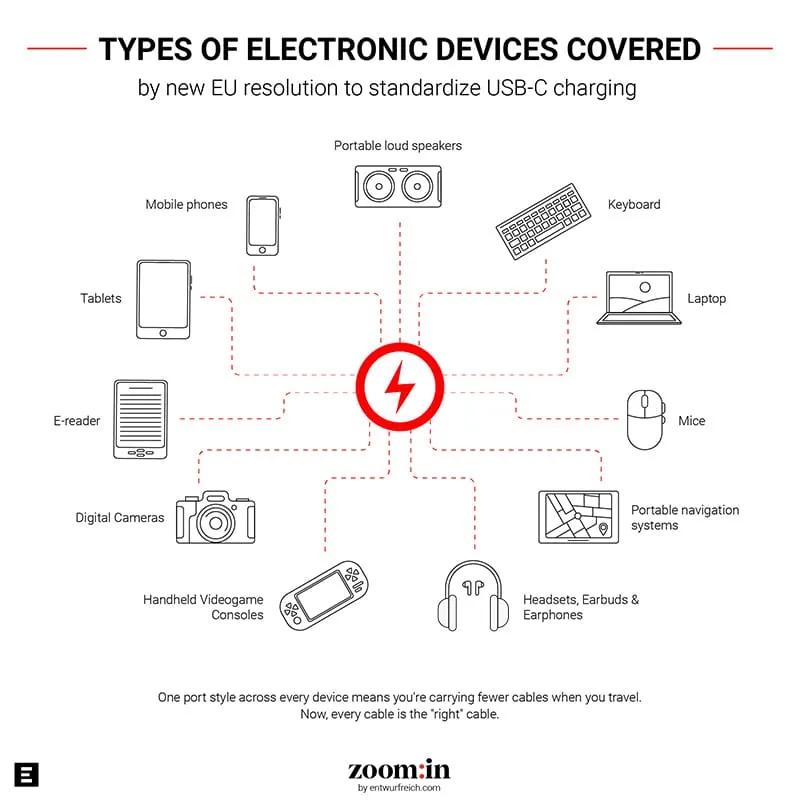
Consider the EU's USB-C standardisation. One cable end fits all devices. Manufacturers ship without chargers — because you already own one. This is not removing a feature. It is removing excess. The savings: 250 million euros per year for consumers. The waste reduction: 11,000 tonnes of e-waste annually.
Contrast this with the Light Phone — a stripped-down mobile with only calls, texts and an alarm. Most users returned to their smartphones within weeks. Why? Because the features that were removed were not excess. They were essential.
The difference matters. Minimalism is not about doing less. It is about knowing what is truly needed — and having the courage to leave out everything else.
2. How does customer satisfaction become a design metric?
A truly minimal product gives the user a feeling: this is it. This is all I need. This is perfect. No feature bloat, no unnecessary complexity, no 'I wish it also did X.'
Some computers ship with bloatware preinstalled. Some pens have perfect ink flow but an awkward clip. Nobody wants a product that is 80% right — yet most of us settle for exactly that.
In a 2025 audit of retail checkout flows (source: Baymard Institute), interfaces that removed 'suggested products' during the final payment step saw an 11.4% increase in completed transactions. Less noise, more completion. The same principle applies to physical products: every button, every switch, every surface that does not serve the user's core task is friction.
For product designers, satisfaction is the ultimate metric. If the user is satisfied, they stay. If they stay, they buy again. If they buy again, you have a business.
3. Why do minimal products last longer on the market?
A product designed for one purpose tends to last generations. Think about the shovel. Its design has barely changed because its purpose is singular: to dig. Variations exist — spades, trenching shovels, post-hole diggers — but the core stays the same.
Modern technology can follow the same logic. Televisions have always had one purpose: deliver content. The form changes, the purpose does not. The product is not the TV. It is content delivery.
When you design for purpose instead of trend, you get a product that lasts. The longer your customer uses it, the stronger the emotional bond. And who does not want a customer for life?
This is the line every leader must walk: solve more problems with fewer tools. Expand only when you absolutely must. That keeps your business lean, profitable and truly minimalist.
Design Icons Who Proved Less Is More
What did Dieter Rams contribute to minimalism?
Dieter Rams defined minimalist product design before the term existed. His ten principles of good design — created at Braun in the 1960s — still guide the industry. 'Good design is as little design as possible.' His radios, calculators and shelving systems stripped away decoration to reveal pure function. Steve Jobs admired Rams deeply. Apple's entire design philosophy descends from Braun's clarity. For industrial designers today, Rams' principles remain the benchmark for what good means.
How did Apple build a brand on minimalist design?
Apple built the most valuable company in the world on minimalism. From the first iPod (one wheel, no buttons) to the iPhone (one screen, one button) to AirPods (no wires, no controls). Every generation removes something. Every removal makes the product easier, faster, more confident to use. The result: a brand where simplicity itself is the premium feature. Apple's market capitalisation exceeded $3 trillion — proof that less, done right, is worth more.
Why is Muji a model for minimalist product design?
Muji — the Japanese retailer — embodies 'no-brand, good design.' Products with no logos, no decoration, no excess. Just materials, function and quality. A Muji pen is not designed to impress. It is designed to write perfectly. Muji proves that minimalism scales from a notebook to an entire lifestyle brand. Their approach — reducing cognitive burden so users can focus on what matters — is exactly what Dieter Rams described half a century earlier.
These are not aesthetic choices. They are business strategies. Rams, Apple and Muji show that minimalism — done with intent — creates products people trust, buy and keep.
What Can an Industrial Design Agency Contribute?
Minimalism looks easy. It is not. Removing the right things requires deep understanding of the user, the context and the manufacturing process.
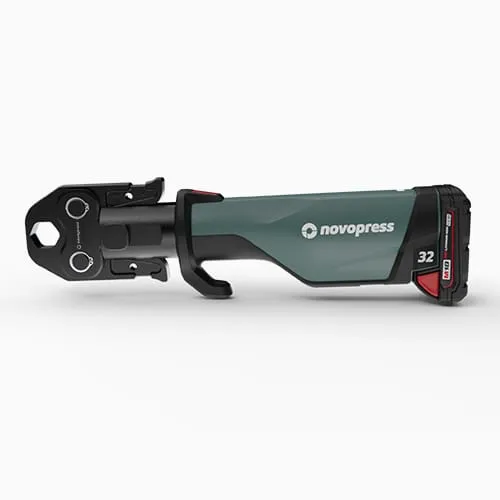
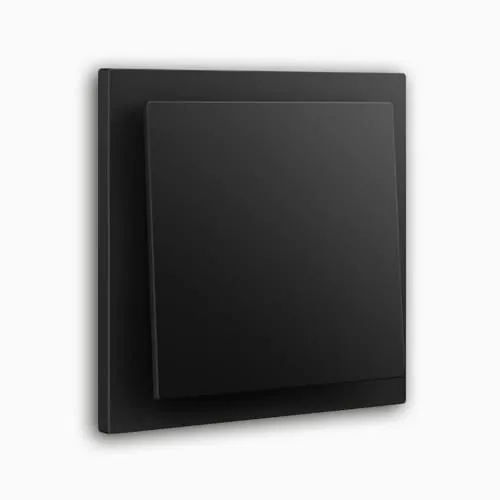
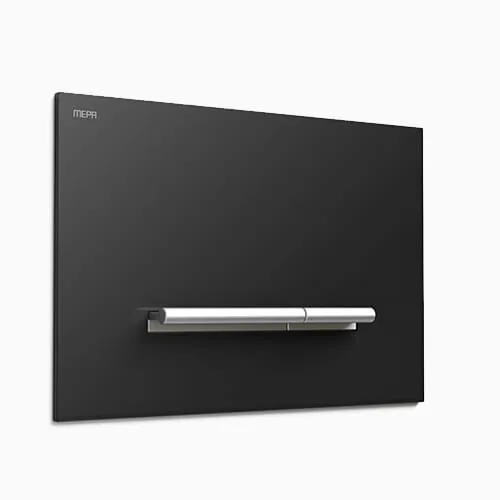
As an industrial design agency, Entwurfreich specialises in this kind of strategic reduction. We help companies find the line between essential and excess — through user research, prototyping and iterative testing. Products like the Novopress 32 pressing tool we developed for our client, the Busch-art linear switch we designed for Busch-Jaeger, and the MEPA Sirius flush plate show how minimalist thinking creates products that are simpler to use, cheaper to manufacture and more satisfying to own.
Through the go-inno programme, eligible SMEs can receive up to 50% public funding on our consulting services.
Selected Projects
Frequently Asked Questions
What is minimalist product design?
Minimalist product design is a strategic approach that removes everything that does not serve the user's core need. It is not about fewer features — it is about the right features. The philosophy traces back to Dieter Rams' ten principles of good design at Braun: 'Good design is as little design as possible.' In practice, this means reducing cognitive load, simplifying manufacturing, and creating products that are intuitive on first use. Every $1 invested in UX yields up to $100 in revenue (Forrester). Companies like Apple, Muji and Braun have built global brands on this principle. For industrial designers, minimalism is the hardest discipline — because it requires knowing exactly what to keep and what to leave out.
How does minimalist design reduce costs?
Fewer components mean lower material costs, simpler assembly lines, fewer failure points and reduced packaging. A product with 30% fewer parts costs less to build, less to ship and less to support. The EU USB-C standardisation alone saves consumers 250 million euros per year and prevents 11,000 tonnes of e-waste. In manufacturing, every eliminated component is a step removed from the production line — reducing cycle time, tooling costs and quality control overhead. Minimalism in design is not just good taste. It is good engineering.
Who is Entwurfreich?
Entwurfreich is an industrial design agency in Düsseldorf, Germany. Founded in 2012, the team has completed over 350 projects for 125+ clients including ABB, Vodafone, Henkel, Coca-Cola, Fujifilm and Covestro. The agency specialises in designing products where less delivers more — from intuitive power tools to minimalist building technology. Recent awards: iF Design Award Gold 2024, Red Dot Best of the Best 2024, German Design Award Gold 2026. Learn more about our design process.
Written by Simon Gorski · June 30, 2023