
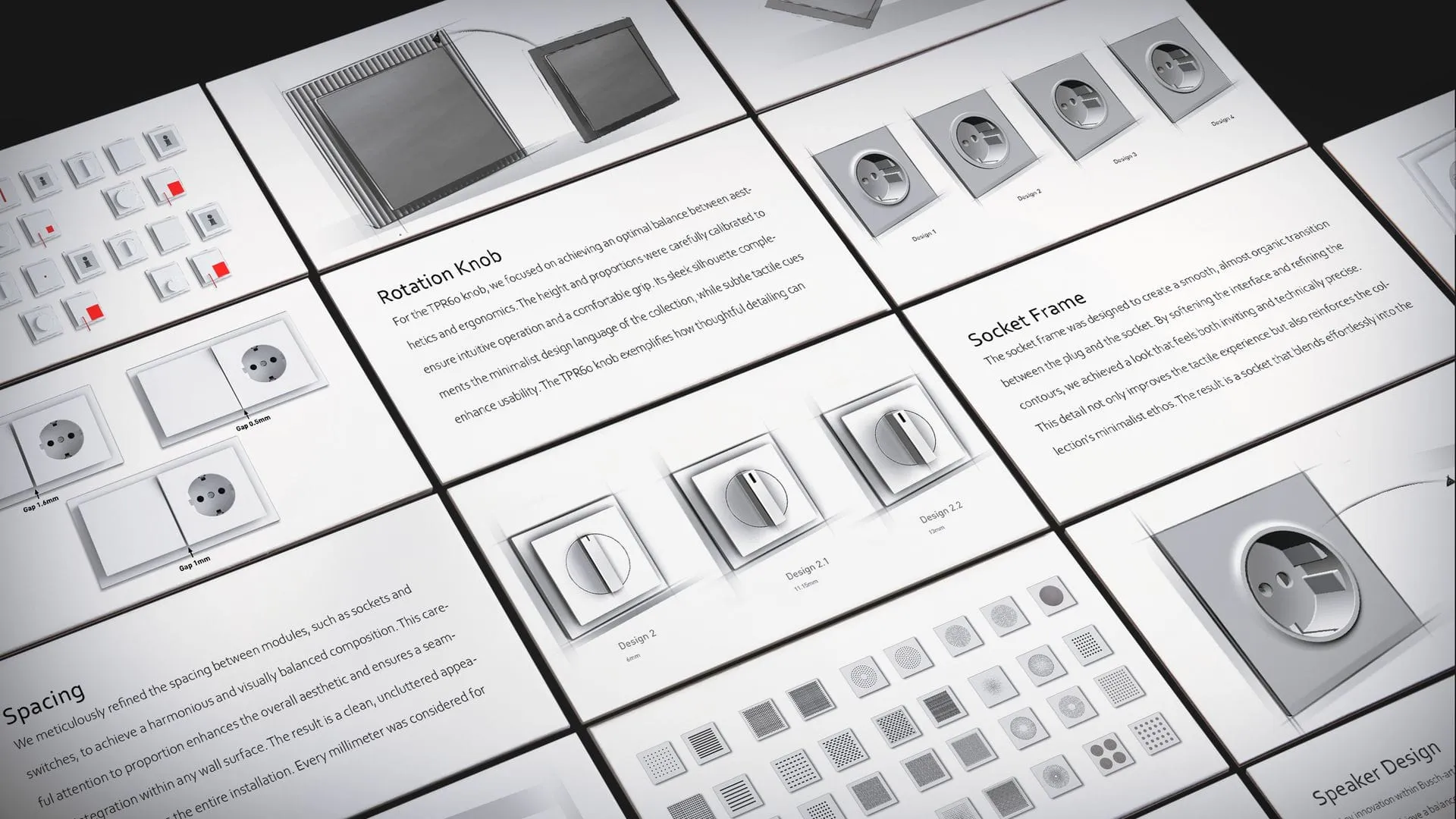
Two terms, one mission — and why the distinction blurs in practice
What separates industrial design from product design — and what unites them
Two terms, one mission
Industrial design or product design — anyone developing a new product hears these terms often. The question quickly arises: what exactly is what, and is there a real difference?
The short answer: yes and no. The longer one: it depends on whom you ask and in what context. In what follows, we clarify the terms, trace their origins and show why the distinction often matters less in everyday project work than many would have you believe.

What is Industrial Design?
Industrial design emerged when the machine replaced the workbench. Suddenly products had to be produced in series for thousands of buyers — a fundamentally different task than the individual craftsmanship of the artisan. Function and form had to become production-ready. The term industrial design carries this in itself. It is about industry.
Industrial design shapes products for serial production and balances three things simultaneously: aesthetics, function and manufacturing. The designer thinks about the production line from the very first sketch — which materials fit, how many individual parts are really needed, whether assemblies can be simplified, and whether the tooling makes economic sense.
The discipline combines technical understanding with creative strength. Industrial designers master injection moulding, CNC milling and deep drawing just as readily as proportion, ergonomics and colour theory — and they speak the engineer's language on equal terms. The goal: a product that looks good, functions reliably, and can be manufactured economically.
How industrial design emerged
Bauhaus gave the discipline new direction in the 1920s. "Form follows function" became the guiding principle. Designers like Dieter Rams developed a design language at Braun that is still quoted today. His ten principles of good design hang on the walls of every design school.
What has fundamentally changed since is the complexity. A product today combines electronics, app connectivity, regulatory requirements and global supply chains. Industrial design is therefore less a stylistic tradition than a translation service — between what people need and what a factory can deliver.
What is Product Design?
Product design is the broader term. It shapes products of every kind — from furniture and tools to packaging and machines, from one-off pieces to series production.
The focus lies on the user. While industrial design always keeps production in mind, product design first asks something else: how does a person interact with this product, what do they really need, what problem is being solved?
Product designers often work more conceptually — they develop the core idea, define function and shape the user experience. The manufacturing question usually comes second. That makes product design flexible in early phases, but it carries a risk: an elegant concept may later be difficult or impossible to realise.
Where academic training draws the line
In academia the boundaries are still formally drawn. Industrial design programmes weight materials science, manufacturing technology and engineering more heavily. Product design programmes push form-finding, user research and conceptual work to the front.
In practice that separation blurs quickly. Modern agencies combine both approaches because client demand requires it — anyone leading a product from briefing to series production needs both languages in their head.
Industrial Design vs. Product Design: The Difference at a Glance
Eight dimensions along which the two disciplines typically differ. Important: in practice the lines overlap heavily. The table shows emphasis, not rigid boundaries.
| Dimension | Industrial Design | Product Design |
|---|---|---|
Disciplinary roots | Mechanical engineering, Bauhaus, series production | Design theory, user research, conceptual work |
Primary focus | Manufacturability and series | User and concept |
Early phase | Material choice, tooling concept, DfM | Use case, persona, function definition |
Late phase | Tolerances, assembly, series release | Handover specification, prototype |
Typical skill set | Injection moulding, CAD, CMF, engineering | User research, sketches, ideation |
Typical output | Physical mass-produced product | Physical product — any production run |
Tools | Rhino, SolidWorks, KeyShot, Fusion 360 | Sketchbook, Procreate, Vizcom, marker |
Educational focus | Materials, manufacturing, engineering | Form-finding, research, concept |
Emphasis — at integrated agencies like ENTWURFREICH, both columns interlock in every project.
What unites both disciplines
As different as the terms may sound, in practice they overlap heavily. Both disciplines pursue the same goal: to design products that work reliably, that achieve something, and that give people genuine added value.
What is decided in both disciplines:
- Function — The product fulfils its purpose reliably and intuitively.
- Form — Proportion, material and surface support brand perception.
- Ergonomics — Use is safe, comfortable and sustainable over time.
- Sustainability — Material choice, lifespan and recyclability are considered.
- Economic viability — The product remains affordable, for manufacturer and buyer alike.
At our agency both perspectives flow together from day one — because the most beautiful design is worthless if it can't be built, and the most elegant manufacturing solution fails if nobody wants the product.
When do you need industrial design, when product design?
This question stands at the start of many project conversations. The honest answer: usually both — with different emphasis, depending on project phase and product type.
Product design is decisive in early concept phases. If you want to invent a new product, enter a new market or set an innovation theme, you first need creative space. The guiding question becomes: what do we actually want to create, for whom and with what benefit?
Industrial design becomes decisive where things get concrete. As soon as the concept stands and implementation comes into view, the hard factors move to the foreground — material, tooling cost, unit cost and manufacturing tolerances. Good industrial design lowers production costs here and at the same time raises quality, without one of the two suffering.
Three examples from our work
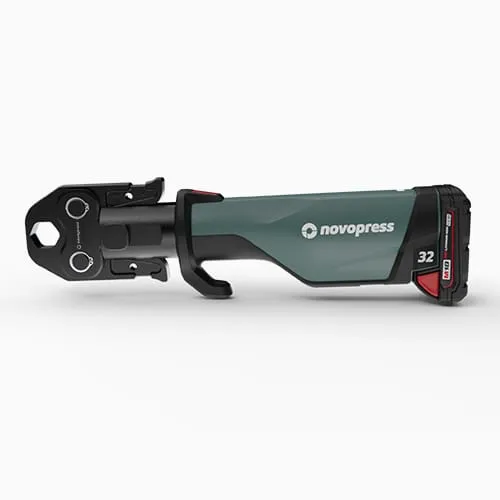
NOVOPRESS commissioned us with the design of the N32 — an intelligent pressing machine for sanitary engineering. The brief was industrial-design-led from day one: the market was clearly defined, the mechanics largely fixed. What mattered was robustness, precise operation, and a form that holds its own on a construction site. The result: German Design Award Gold 2026. View project →
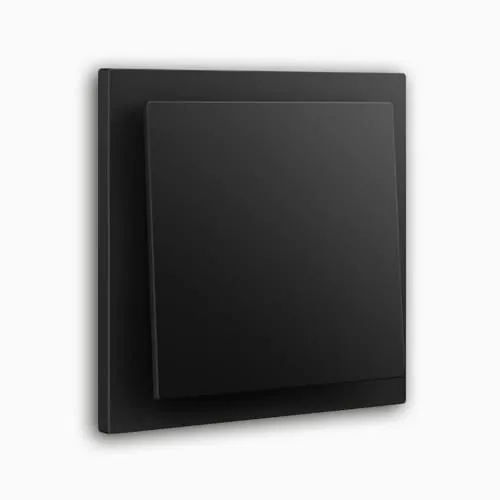
For Busch-Jaeger we designed the Busch-art linear switch range — and the emphasis shifted. A switch is more than a functional component; it is a wall-long brand element in the living space. We had to think more as product designers — gesture, material, situation of use — while manufacturing constraints were simultaneously very tight. The design won iF Gold, Red Dot Best of the Best and ADI Delta Bronze 2024. View project →
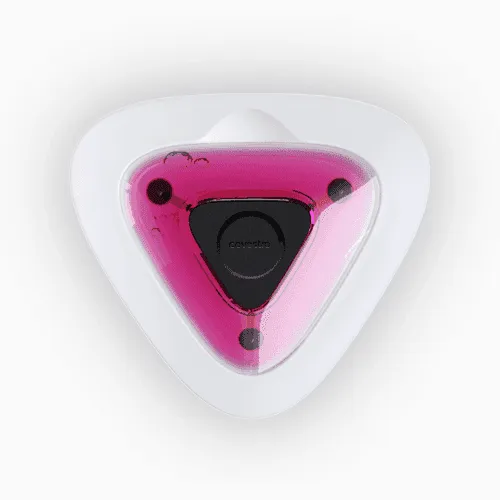
With the 3D-printed wearables for Covestro it was the other way around: a product-design project with an experimental character, where material and use case were still unclear. The concept stood before the manufacturing question — only once the use case was clear did industrial-design considerations come into play. View project →
Three projects, three weightings — what unites them is one thing: none would have come into being without the respective other perspective.
Industrial design and product design in practice: the integrated approach
The most successful products emerge where both disciplines work hand in hand. At ENTWURFREICH that means: the designer understands tool partitioning, and the engineer knows why a small radius change can shift the entire brand perception.
This approach has concrete advantages:
Faster time to market. When it is clear from day one how a product will be manufactured, late and expensive re-designs are avoided. What looks great in a 3D model often fails against the reality of the production hall — anyone who knows both worlds avoids this trap.
Lower development costs. Every design change in a late project phase costs money and time: tools have to be adapted, prototypes rebuilt, tests repeated. A well-considered design from the very beginning saves these loops.
Higher product quality. A product that is simultaneously user-centred and manufacturing-ready convinces across the board — it functions better, feels better and lasts longer.
The role of prototyping
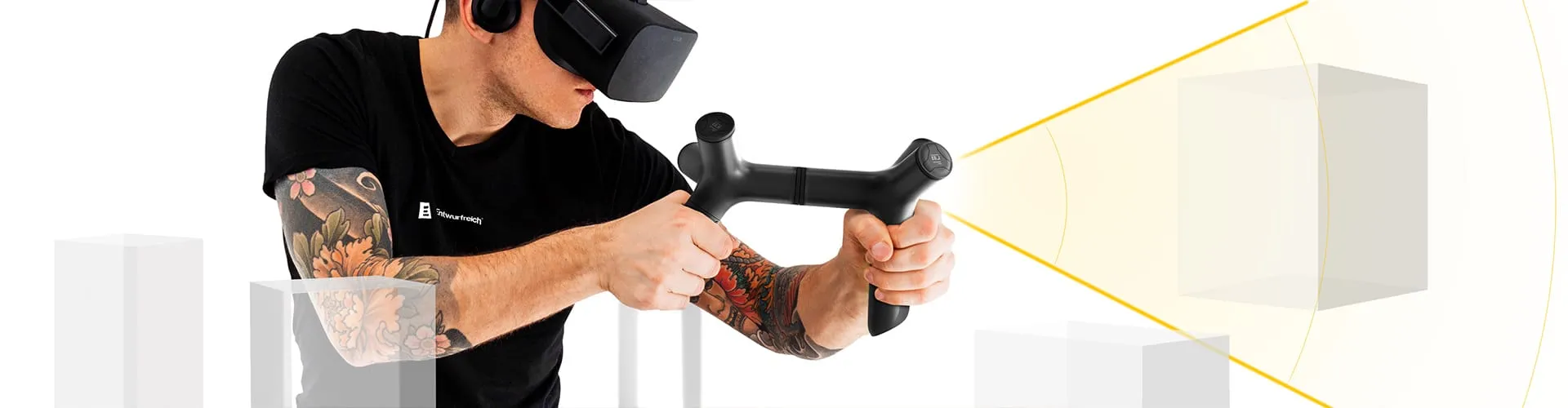
An additional lever in the integrated approach shows up in prototyping. We make ideas tangible early — modelled, milled, sometimes 3D-printed — and test whether a design is sensible. This iterative way of working connects the conceptual side of product design with the feasibility check of industrial design.
The future: how industrial design and product design are evolving
The boundaries are blurring further. New technologies — 3D printing, generative AI, digital twins — are fundamentally changing both disciplines.
Additive manufacturing. Suddenly geometries are possible that were previously not manufacturable. This opens new creative freedoms for designers but also requires new process knowledge.
Sustainability. It is becoming the central design criterion. Designers today must consider the entire life of a product: where the materials come from, the energy required in production, the use phase, and the question of recycling. The answer demands a holistic view that unites both disciplines.
Digitisation. It is changing the way we work. VR makes designs tangible before a prototype exists, and simulation software tests loads on the digital model. The process becomes faster — and at the same time more precise.
Artificial intelligence. It accelerates everything once more. Generative tools deliver dozens of design variants in minutes as starting points for further development. What once required hours of sketching can now be explored almost instantly. Beyond that, AI supports component optimisation and identifies structural weaknesses early.
Crucially: AI does not replace creative judgement — it enlarges the space of possibilities. Product designers use it heavily in concept and ideation phases, industrial designers more in manufacturing itself. The result: shorter development cycles, more iterations per week, and ultimately better products.
Circular Economy
A trend with particular weight is the circular economy. Products are no longer thought of linearly — manufacture, use, dispose — but circularly. Every component should be returnable to the cycle at the end of its life. Designers today must consider disassembly and reuse from the very start. Here industrial design and product design come fully together: it is about the user, about manufacturing, and about the material — all simultaneously.
Why the distinction barely matters in the end
After all these definitions a surprising insight emerges: the conceptual separation between industrial design and product design is often secondary in everyday project work. What really counts are the essential questions:
- Does the design team understand the needs of users?
- Do the designers know the possibilities and limits of manufacturing?
- Is the thinking sustainable and long-term?
- Does the price-to-performance ratio work?
- Does the product fit the brand strategy?
A good design team masters all of these dimensions — regardless of whether the business card says "industrial designer" or "product designer". At ENTWURFREICH we work with a team that does both and sets the appropriate emphasis depending on the project phase.
Conclusion: Integrated design is the future
Industrial design and product design are not opposites — they are two sides of the same coin. Industrial design provides the technical know-how and manufacturing expertise; product design provides the user-centred perspective and conceptual strength. The best results emerge where the two approaches come together.
For companies wanting to develop new products, that means: look for partners who master both worlds — partners who not only deliver beautiful concepts, but can also bring them into series production; who understand your manufacturing, know your processes, and still think innovatively.
Over 14 years at ENTWURFREICH we have developed more than 350 products — from a switch to a pressing machine to a 3D-printed wearable. 25 international awards, including German Design Award Gold, iF Gold and Red Dot Best of the Best, confirm what we have learned from working with Henkel, Vodafone, ABB, Busch-Jaeger, Vaillant and Covestro: the most successful projects are those in which we take on both perspectives from the very beginning — projects where we ask not only "how should it look?" but also "how do we build it?", and not only "how do we produce it?" but also "what does it feel like for the user?".
It is precisely this combination that decides between a good product and a great one — and that, in the end, is the only distinction that really counts.
Selected Projects
Frequently Asked Questions
When should I involve a design agency?
Earlier than most companies think — ideally in the concept phase, before technical decisions have been made. The earlier design is integrated, the more strongly it influences function, user experience and production cost. Anyone who only brings in an agency once construction and tooling are locked in captures only a fraction of the potential. Ideally the designer sits at the table at the first briefing — not at the first mockup.
What distinguishes industrial design from engineering?
Both disciplines are closely interlocked but focus on different aspects. Engineers primarily ensure that a product works: they calculate loads, select components and secure technical reliability. Industrial designers instead shape how a product looks, feels and is experienced by the user. They define form, ergonomics and material aesthetics, but keep manufacturability in view. In practice both disciplines are deeply intertwined. The best products emerge when designers and engineers collaborate from the very beginning — not sequentially.
How much does an industrial design project cost?
The range is wide and depends on complexity, phase depth and IP model. A compact design sprint for concept finding lies in the low five-figure range. A full development from strategy workshop through series support reaches six-figure sums depending on the product. The more honest indicator, however, is not the price but the lever: what share of the eventual unit cost can early, integrated design influence? Usually a multiple of the design investment.
What does industrial design development include?
The process reaches from the first idea to the series-ready product. It includes market and user analysis, the conceptual design phase, 3D modelling, prototyping, manufacturing-ready detailing, and accompanying through to series production. A professional process integrates engineering know-how from the very beginning — so that the finished product convinces not only aesthetically, but also technically and economically.
What tools do industrial designers use?
The toolbox depends on the project phase. In early concept phases: Sketchbook, Procreate, Adobe Illustrator. For 3D modelling and surface work: Rhino, SolidWorks, Fusion 360 — industry standards, with KeyShot covering photorealistic rendering. Increasingly, AI-assisted tools — Vizcom, Adobe Firefly, Midjourney — complement the early ideation phase. Which software an agency ultimately uses depends on industry, product type, and the requirements of manufacturing partners.
Written by Matthias Menzel · May 25, 2026