
Visual Brand Language for Industrial Design
Why Your Products Need a Shared Design Language
What Is a Product Design Guideline?
A product design guideline is a strategic document that defines the visual and tactile identity of a product portfolio. It ensures that every product a company makes looks, feels and behaves like part of the same family.
The concept goes by many names. Visual Brand Language (VBL), Visual Product Language (VPL), Product Style Guide (PSG) or simply industrial design guideline. The names differ, but the goal is the same: consistency across products, markets and touchpoints.
A good guideline is not a rigid rulebook. It is a flexible framework that gives designers clear boundaries while leaving room for creativity. As an industrial design agency, we see this every day. Everyone uses the same words, but they can still write different stories.
At Entwurfreich, we have developed product design guidelines for companies across industries — from building technology to power tools. Each one is different, because each company is different. But the process always starts with the same four questions.
Four Questions Before You Start
1. Why does your company want a design guideline?
On the surface, it is often about uniform design language, brand recognition or consistent customer experience. But there are usually deeper reasons:
- Reduce product costs through more frequent use of identical parts
- Give the design team a basis for evaluating and defending concepts internally
- Improve time-to-market by reducing design iterations
- Lower development costs for both internal and external designers
Knowing these reasons is essential. They reflect the reality of your company. A guideline that ignores them will not be used.
2. Who is going to use it?
The designers, obviously. Maybe marketing and brand management. Product management too. And engineering? Yes, them as well.
We have this conversation regularly. Clarify early who your real audience is. Every department needs different information from a design guideline. Define your target group and the value you offer them.
If you plan to share it with external design agencies later, consider adding a dedicated briefing section. It saves time and prevents misunderstandings.
- What guidelines already exist?
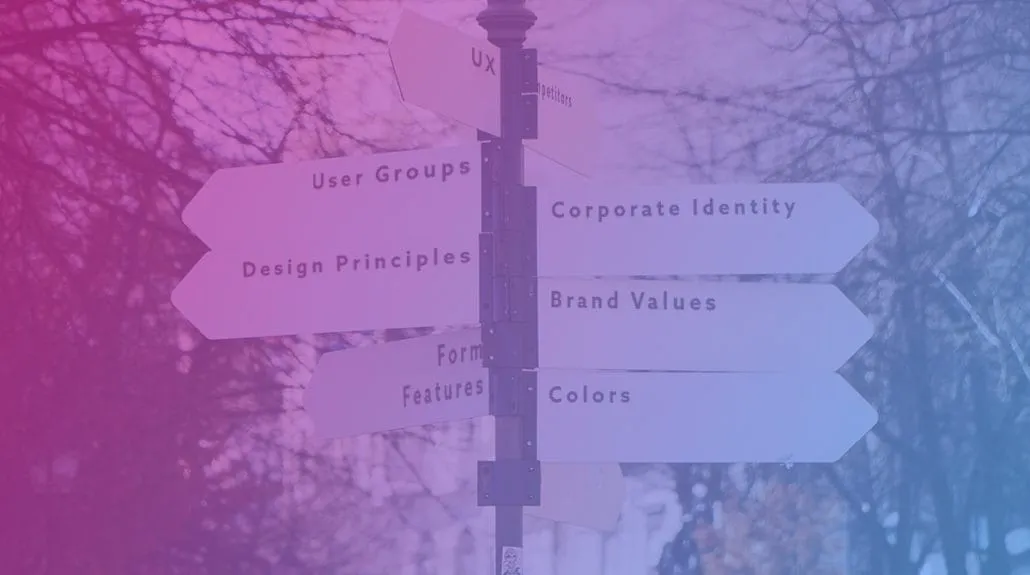
Most companies already have CI, brand, UX or marketing guidelines. The design department rarely owns all of them. Clarify early how you update shared information — like CI elements — in the product design guideline.
Make a list of who owns each existing guideline. Agree on a process for updates. This small step saves months of frustration later.
4. Is the guideline anchored in your Stage-Gate process?
If the answer is no, do not invest too much energy yet. Use that time to turn the no into a yes.
We have seen too many guidelines die in daily business because they were not part of the development process. Only when a design guideline becomes a mandatory checkpoint in Stage-Gate can it not be ignored by other departments. Everything else is a good intention, not a guideline.
How Do You Build a Visual Brand Language in 7 Steps?
Once the four questions are answered, the content follows. Here are the seven core elements we include in every product design guideline:
1. Design principles and brand values. The foundation. What does the brand stand for? What emotional response should the product trigger? These principles guide every decision.
2. Form language and silhouettes. How does your product look from a distance? Sharp or soft? Geometric or organic? The silhouette is the first thing a customer recognises. BMW's Hofmeister kink and Porsche's sloping roofline are textbook examples.
3. CMF — Colour, Material, Finish. The palette that makes your products feel like a family. Primary colours, accent colours, approved materials, surface textures and finishes. This section is often the most referenced in daily work.
4. Signature details. The small things that make a big difference. Edge radii, chamfers, joint lines, button shapes, LED indicators. Apple built an entire brand identity on consistent corner radii and material transitions.
5. Typography and graphic elements. Product labelling, icon systems, UI elements (for products with screens). These must align with the broader corporate design.
6. User group definitions. Who uses the product? What are their expectations, habits and pain points? This section connects the guideline to real users, not just aesthetics. It ties into empathetic product design.
7. Application examples and do's/don'ts. Show, don't just tell. Real product renders, mock-ups and annotated examples make the guideline usable. Include what not to do — it is often more instructive than what to do.
Famous Examples of Visual Brand Language
BMW: The kidney grille, the Hofmeister kink, the proportions of a long hood and short overhang. These elements have evolved over decades but remain recognisable. When you see a BMW from 200 metres away, you know it is a BMW.
Apple: The Snow White design language introduced in the 1980s defined precise line widths (2 mm wide, 10 mm apart) to suggest precision. Today, Apple's signature is in corner radii, material transitions and the seamless integration of hardware and software.
Braun: Dieter Rams' ten principles of good design still guide the brand. Clarity, honesty, restraint. Every Braun product looks like it belongs in the same family — even across categories from shavers to kitchen appliances.
These are not accidents. They are the result of deliberate, documented design guidelines that are enforced across every product.
Why It Matters for Your Business
Brand consistency is not just a design topic. It is a business topic. Companies with consistent brand presentation see up to 33% higher revenue (source: Lucidpress/Marq). A design guideline reduces development costs, shortens time-to-market and makes it easier to onboard new designers or external agencies.
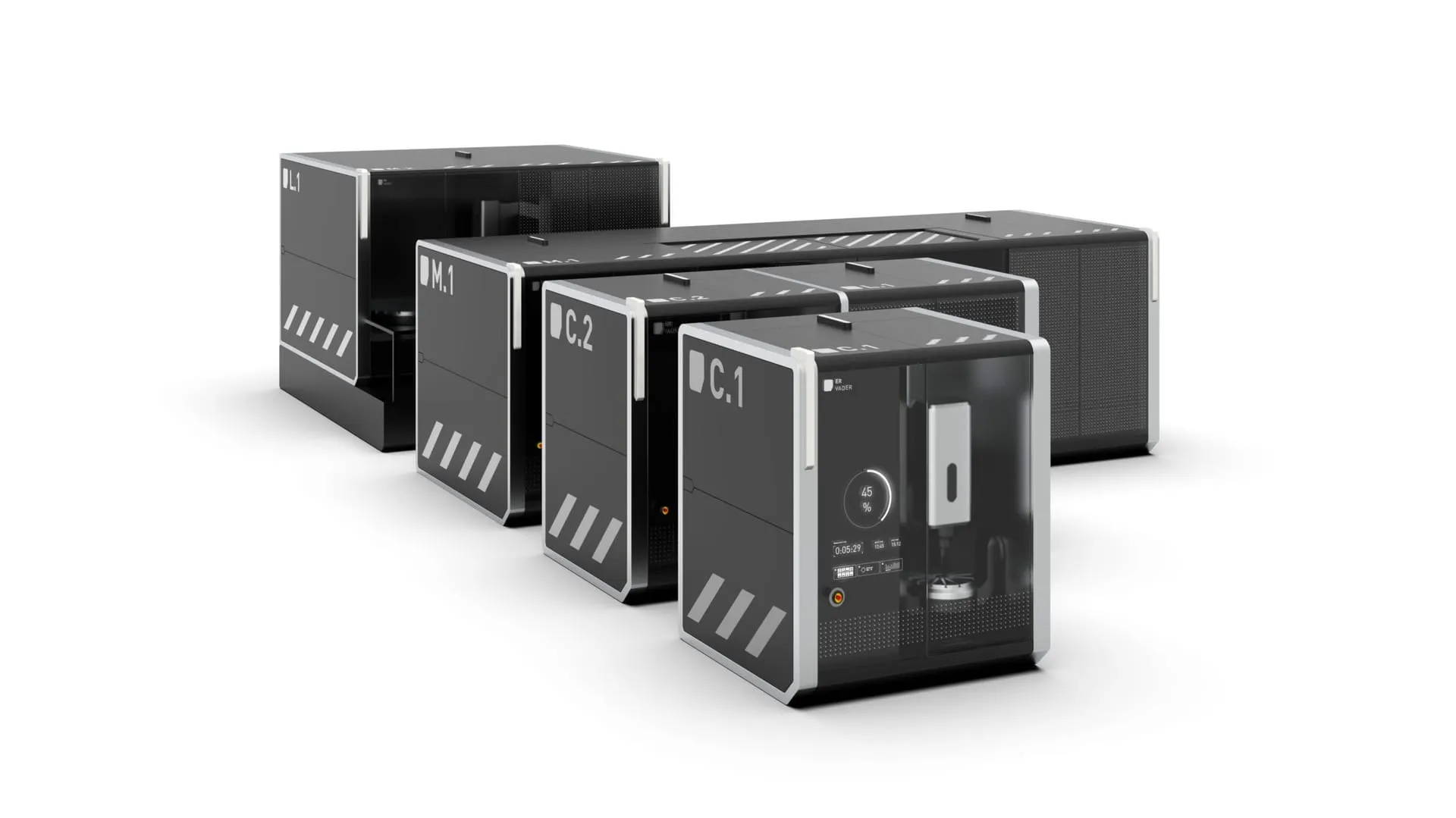
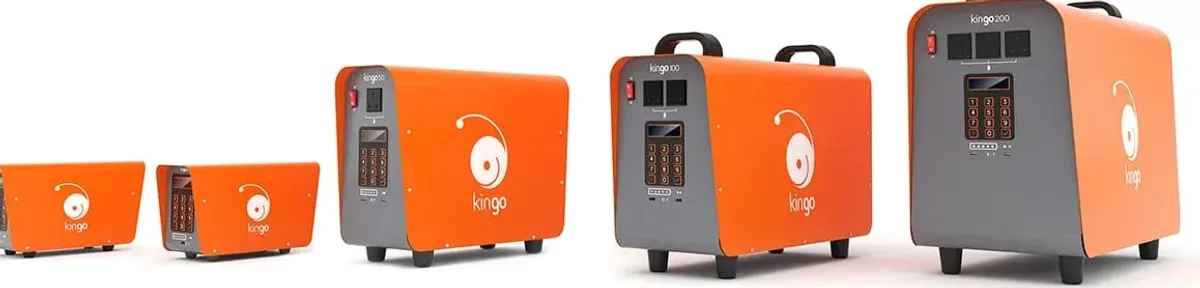
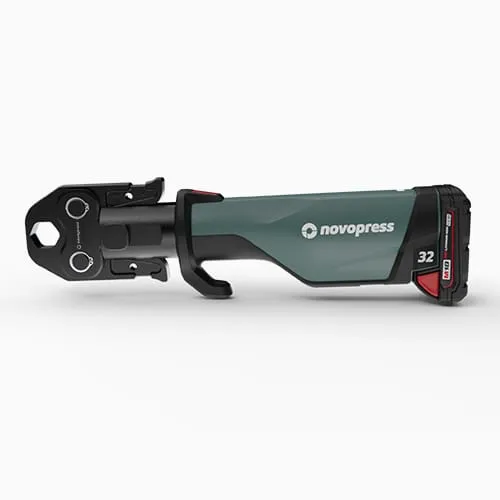
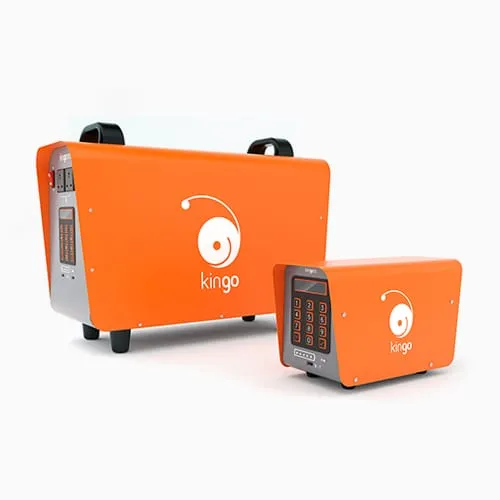
As an industrial design agency with over 14 years of experience, Entwurfreich builds design guidelines as part of our industrial design process. Projects like the Novopress pressing tool family, the ER_VADER machine series and the Kingo solar battery range show how a consistent design language works across a product portfolio. We combine strategic thinking with hands-on product experience. The result: guidelines that are not just beautiful documents, but tools that get used every day.
Selected Projects
Frequently Asked Questions
What is a Visual Brand Language (VBL)?
A Visual Brand Language is a strategic framework that defines how a brand expresses itself through physical products. It covers form, colour, material, finish, texture and interaction design. The goal is to create a consistent, recognisable product family across all markets and categories. A VBL goes beyond graphic design. It defines the three-dimensional identity of a brand. Elements include silhouettes, surface transitions, signature details and CMF palettes. Companies like BMW, Apple and Braun have used VBL to build decades of brand recognition. At Entwurfreich, VBL development is a core service within our industrial design practice.
How much does a product design guideline cost?
The cost depends on scope, complexity and the number of product categories covered. A focused guideline for a single product line can start at EUR 15,000–25,000. A comprehensive VBL covering multiple categories, markets and touchpoints typically ranges from EUR 40,000–80,000. Through the go-inno programme, eligible SMEs can receive up to 50% public funding on consulting costs — making professional design guidelines significantly more affordable.
Who is Entwurfreich?
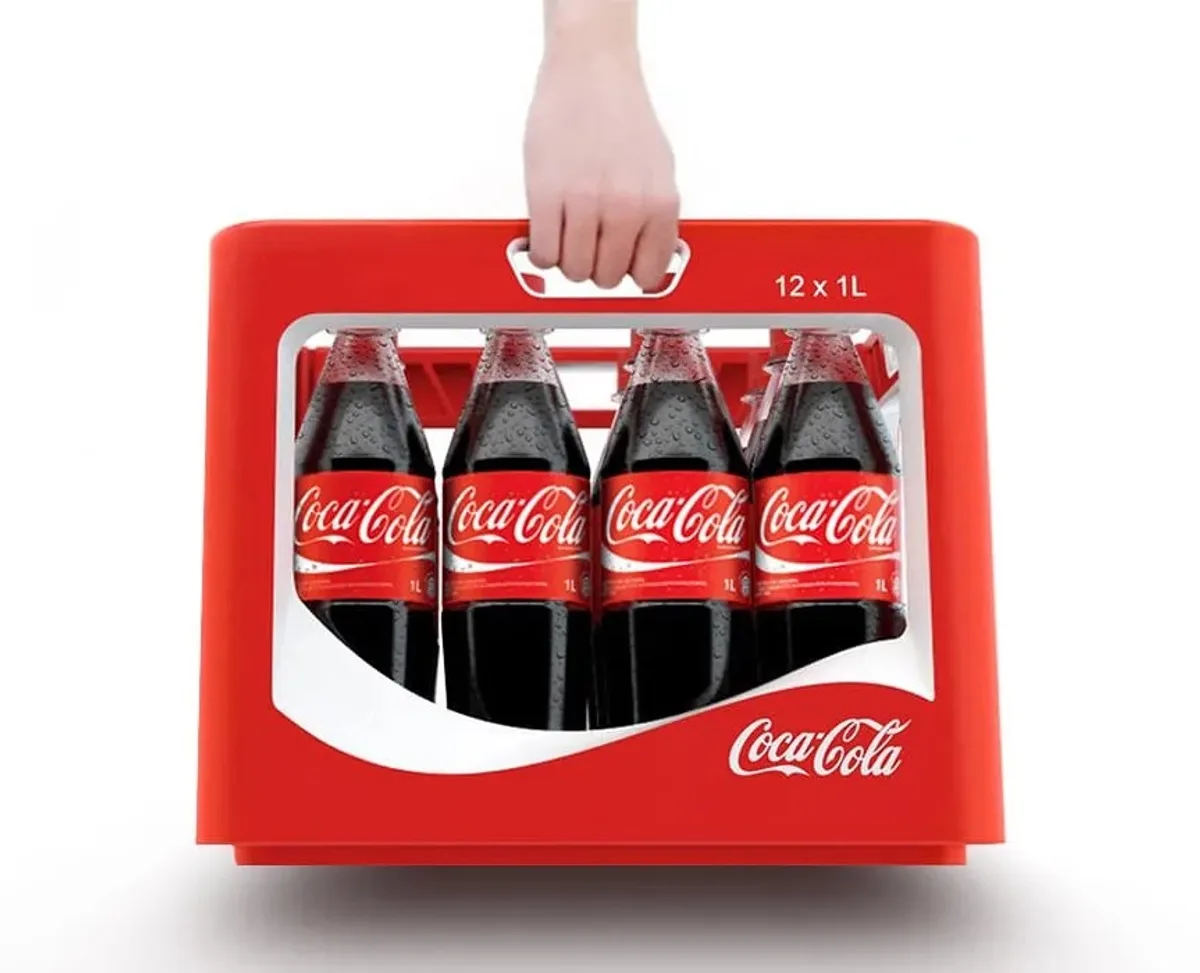
Entwurfreich is an industrial design agency in Düsseldorf, Germany. Founded in 2012, the team has completed over 350 projects for 125+ clients including ABB, Vodafone, Henkel, Coca-Cola, Fujifilm and Covestro. The agency builds product design guidelines, visual brand languages and complete product portfolios — from first sketch to production. Recent awards: iF Design Award Gold 2024, Red Dot Best of the Best 2024, German Design Award Gold 2026. Learn more about our design process.
Written by Simon Gorski · June 9, 2021