

Why Emotional Design Is the Most Underrated Business Strategy
Products That Feel Right Win Every Metric
What Is Empathetic Product Design?
Empathetic design starts with a question: what does the user feel? Not what they click, not what they say in a survey — but what they actually experience when they hold a product, open a package or press a button for the first time.
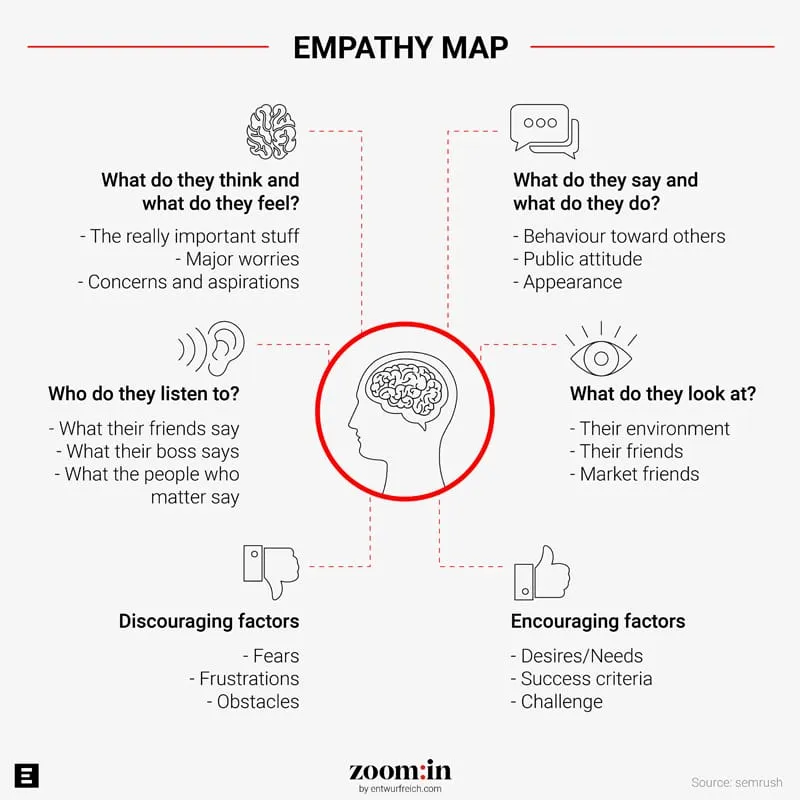
The term was popularised by IDEO, the design consultancy that championed human-centred design in the 1990s. Their principle: seeing and hearing things with your own eyes and ears is the critical first step in creating a breakthrough product. Empathy mapping — a technique described by the Nielsen Norman Group — structures this observation into four dimensions: what users think, feel, say and do.
In industrial design, empathy goes beyond digital interfaces. It shapes the weight of a tool, the curve of a handle, the feedback of a switch. A product that feels right in the hand communicates care before a single word is spoken. That feeling is not accidental. It is engineered.
What Is the Business Case for Empathetic Design?
The numbers are clear. According to SAP Emarsys (2023), customers who feel an emotional connection to a brand are worth 306% more over their lifetime. Emotional loyalty — loyalty driven by feeling rather than incentives — has risen 26% since 2021 and now represents 34% of all loyal customers.
83% of consumers say trust is the number one reason they remain loyal. 95% of loyal customers say they trust the brand they buy from (source: SAP Emarsys). Members who redeem personalised rewards spend 4.5 times more than those receiving generic offers.
A 5% increase in customer retention boosts profits by up to 95%. Every $1 invested in UX returns up to $100 in revenue (source: Forrester). 77% of brands now say customer experience is their primary competitive differentiator (source: DesignRush).
For product managers, the case is simple: empathy pays. Products that build user confidence — making people feel competent, in control and cared for — outperform on every commercial metric.
Don Norman's Three Levels of Emotional Design
In his book Emotional Design (2004), cognitive scientist Don Norman introduced a framework that still guides product development. He argued that emotion has a crucial role in the human ability to understand and interact with objects. His three levels explain why some products inspire love — and others end up in a drawer.
What is the visceral level of design?
The visceral level is about first impressions. Before the user reads a label or presses a button, their brain has already decided: does this look right? Does it feel right? Colour, texture, shape, weight — these sensory signals trigger immediate emotional responses. Norman showed that aesthetically pleasing objects appear more effective to users, even before they test functionality. In industrial design, this means surface finish, material choice and proportions are not decoration. They are the first layer of trust.
What is the behavioural level of design?
The behavioural level concerns use. Does the product do what the user expects? Is the interaction intuitive? Good behavioural design is human-centred by definition — it focuses on understanding and satisfying the needs of the person using the product. A power tool that gives clear feedback through LED status, haptic confirmation and intuitive controls reduces errors and training time. A light switch that needs no manual builds confidence on first contact. This level is where usability engineering meets empathy.
What is the reflective level of design?
The reflective level is where meaning lives. It is the emotional connection that forms over time — influenced by culture, identity and personal experience. A product at this level becomes part of who the user is. Think of the Apple MacBook: it did not just give creative professionals a tool. It gave them an identity. Musicians, photographers and designers felt empowered to enter the digital space without needing technical knowledge. Apple designed an experience that started with a question: what could you do if you had a tool like this? That question is the essence of empathetic design at the reflective level.
Four Principles of Empathetic Product Design
1. How do you find the emotional pain points?
Every worthwhile solution solves a problem — and the problem usually has an emotional root. There is almost a therapeutic quality to the process. Your product needs to solve the issue in a way that also addresses the underlying vulnerability.
Consider accounting software. Thousands of platforms do the same thing: help business owners track finances. What makes them different is how they solve the problem. One person needs something powerful and detailed to feel confident their numbers are correct. Another needs something simple that looks professional — so they can send invoices without exposing that maths is not their strength.
The same principle applies to physical products. A dental microscope must inspire confidence in a life-critical situation. A pressing tool must feel trustworthy in a technician's hands from the first use. Empathy mapping — interviewing, observing and testing with real users — reveals these emotional drivers.
2. Why must product and marketing share the same empathy?
Smart companies know that marketing should not wait until the product is finished. When product and marketing teams speak to the same customers at the same time — collecting the same data, identifying the same gaps — the result is a product that the market already understands before launch.
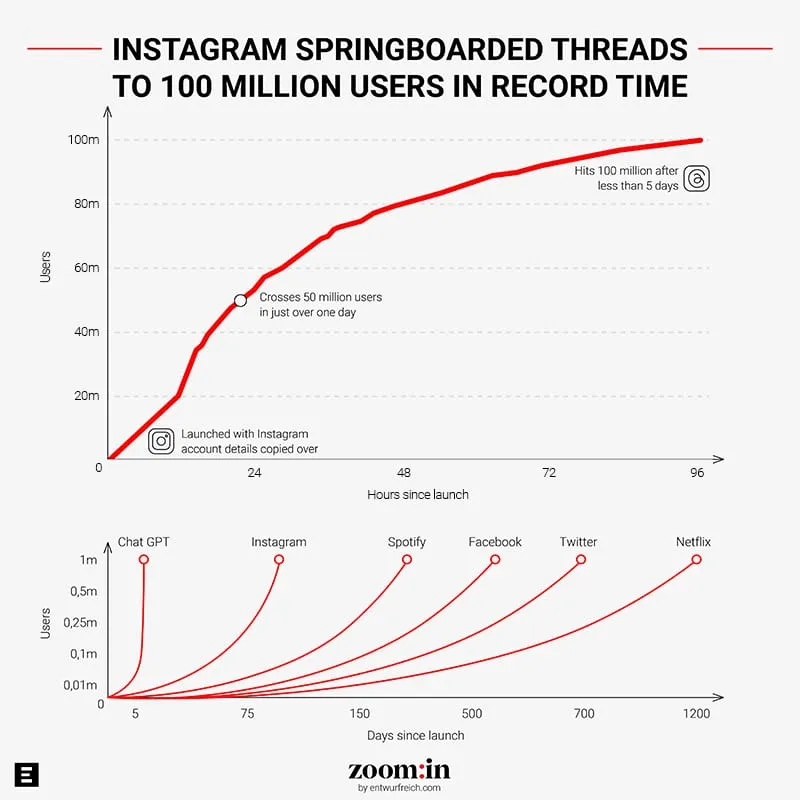
Meta's Threads is a perfect example. The launch was explosive because the teams designed something empathetic to what users actually wanted: the simplicity of Twitter, combined with the audience they had built on Instagram. They recognised the gap, understood the emotional frustration with the existing platform, and created something familiar yet fresh. No algorithm to beat. No stats to distract. A clean slate with your community already there.
The lesson: empathetic design is not just the designer's job. It is a shared language across the entire organisation.
3. How does inclusive design expand empathy?
Inclusive design is empathy made structural. It ensures products work for people with a wide range of abilities — and the business case is strong. Inclusive design increases overall usability by up to 30% for all users, not just those with specific needs.
The most celebrated example is OXO Good Grips. Founder Sam Farber designed kitchen tools with thick, comfortable grips after watching his wife struggle with arthritis. The result was not a medical device — it was a better product for everyone. OXO proved that designing for the edges of human ability improves the experience at the centre. (More on OXO's story in the Design Icons section below.)
The same logic applies to industrial products. A light switch must be installed by electricians and used by residents of all ages. Two audiences, two sets of needs, one product. Empathetic design finds the solution that serves both.
4. How does sensory feedback build user confidence and emotional trust?
User confidence depends on feedback. A click sound, a vibration, a light change — these micro-confirmations tell the brain: you did it right. Without feedback, even correct actions feel uncertain.
Dyson understood this intuitively. The transparent dust bin on their vacuum cleaners is not just functional — it is a confidence signal. You can see the product working. The engineering is visible. The investment feels justified. Dyson's design team creates products driven by three principles: function, emotion and senses.
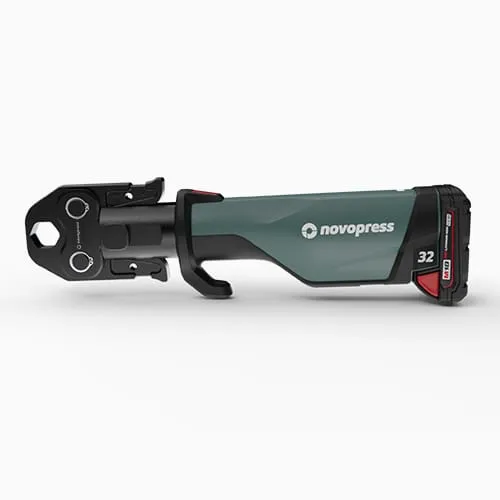
In professional tools, feedback becomes safety-critical. The Novopress 32 pressing tool, which we developed for our client, uses LED status indicators and haptic confirmation to give technicians instant certainty that a press connection is secure. That certainty is not a luxury. It is an emotional need that directly affects work quality.
Design Icons Who Built Brands on Empathy
How did Apple use empathy to change an industry?
Apple did not just design great products — they designed experiences that made users feel capable. The MacBook lowered the bar for creative professionals to enter the digital space. Musicians, photographers and designers could present their work to the world without taking a technology course. The iPhone replaced complexity with a single gesture: tap. Each product generation removed something — and each removal made users feel more confident, not less. Apple's market capitalisation exceeded $3 trillion because empathy, executed consistently, creates the strongest form of brand loyalty.
What makes OXO a masterclass in empathetic industrial design?
OXO Good Grips started with one observation: a person struggling to peel a potato. Sam Farber did not commission a market study. He watched his wife and felt her frustration. The result — a peeler with a thick, non-slip grip — became one of the most successful kitchen tool lines in history. OXO now sells over 1,000 products, all designed with the same principle: if it works for someone with limited dexterity, it works better for everyone. For product designers, OXO is proof that empathy is not a constraint — it is an innovation engine.
Why is Dyson's transparency a form of empathy?
James Dyson bet his company on a single insight: people do not trust what they cannot see. The transparent dust bin was a radical design choice in the 1990s. It let users see their vacuum working — turning a mundane household chore into a moment of satisfaction. Dyson extended this principle across product lines: visible airflow, colour-coded performance indicators, materials borrowed from aerospace and industrial engineering. Every design choice communicates: we have nothing to hide. That transparency builds emotional trust — the kind that turns a customer into an advocate.
What Can an Industrial Design Agency Contribute?
Empathetic design looks simple in retrospect. But removing the right barriers and amplifying the right signals requires deep understanding of users, contexts and manufacturing processes.
As an industrial design agency, Entwurfreich builds empathy into products from day one. Our process starts with user research — not surveys, but observation, interviews and contextual inquiry. We use empathy mapping to uncover not just what users need, but how they feel. Every design decision — from handle curvature to LED colour — is tested against emotional as well as functional criteria.
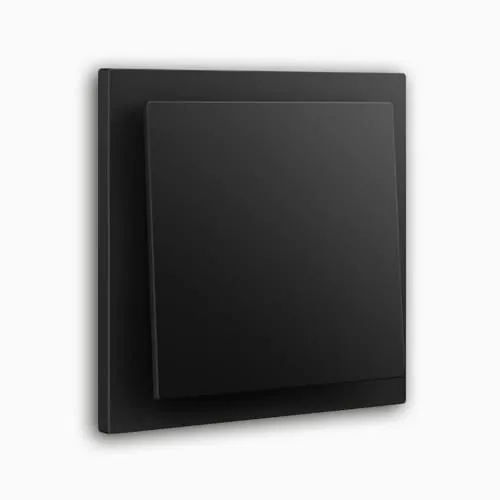
Products like the Novopress 32 pressing tool, which we developed for our client, the Busch-art linear switch we designed for Busch-Jaeger, and the Kepler dental microscope show how empathetic thinking creates products that users trust on first contact.
This article connects directly to our piece on user confidence — because confidence is the measurable outcome of empathetic design. And our work on minimalism shows that reducing complexity is itself an act of empathy.
Through the go-inno programme, eligible SMEs can receive up to 50% public funding on our consulting services.
Selected Projects

Frequently Asked Questions
What is empathetic product design?
Empathetic product design is a human-centred approach that prioritises understanding users' emotions, frustrations and aspirations — not just their functional needs. The method draws on Don Norman's three levels of emotional design (visceral, behavioural and reflective) and techniques like empathy mapping, contextual inquiry and iterative user testing. In industrial design, empathy shapes everything from handle ergonomics to interface feedback. The goal is products that feel right — intuitively, emotionally and functionally. Companies like Apple, OXO and Dyson have built global brands on this principle. As an industrial design agency, Entwurfreich applies empathetic design across sectors from consumer products to medical devices.
How does empathetic design improve business results?
The data is compelling. Customers with an emotional connection to a brand are worth 306% more over their lifetime. Emotional loyalty has risen 26% since 2021. A 5% increase in retention boosts profits by up to 95%. Every $1 invested in UX yields up to $100 in revenue (Forrester). 83% of consumers name trust as the top reason they stay loyal (SAP Emarsys). Inclusive design — a form of structural empathy — increases usability by 30% for all users. Products designed with empathy reduce support calls, lower return rates and increase repeat purchases.
What is Don Norman's emotional design framework?
Don Norman's framework, introduced in Emotional Design (2004), describes three levels at which products engage users. The visceral level concerns first impressions — colour, shape, texture, weight. The behavioural level concerns usability — does the product do what the user expects? The reflective level concerns meaning — the emotional bond that forms over time. Norman showed that aesthetically pleasing products appear more effective to users, even before testing. For industrial designers, the framework provides a structured way to design for emotion, not just function.
How do you measure the success of empathetic design?
Empathetic design can be measured through several complementary methods. Net Promoter Score (NPS) captures willingness to recommend — Promoters have 600-1,400% higher lifetime value than Detractors. Task completion rate shows how often users succeed without help. Time-on-task reveals how quickly users reach their goals. Error rate pinpoints where confidence breaks down. Qualitative interviews uncover emotional responses that quantitative data misses. The most effective approach combines all of these: behavioural metrics for the what, qualitative research for the why. At Entwurfreich, an industrial design agency in Düsseldorf with 350+ projects for clients like ABB, Vodafone and Coca-Cola, we integrate these methods into every phase — from early empathy mapping to post-launch usability audits. Learn more about our design process.
Written by Simon Gorski · July 18, 2023