
MEDICA 2018 — Düsseldorf, November 12–15
The World's Largest Medical Trade Fair
MEDICA is the world's largest medical trade fair. Founded in 1969, it takes place annually at Messe Düsseldorf. The 2018 edition drew over 120,000 visitors from 155 countries and featured 5,273 exhibitors (source: Messe Düsseldorf). The global medical device market was valued at $425 billion in 2018, projected to reach $612 billion by 2025 (source: Grand View Research).
After attending MEDICA in previous years, Entwurfreich decided to get more involved in 2018. We interviewed key players from Israel, Germany and China. At our agency, medical device design is a core competence — from dental microscopes to surgical lighting. We also covered medical design in depth in our article on medical product development. This ZOOM-IN Trendreport captures the key findings from MEDICA 2018.
Five Key Trends at MEDICA 2018
1. How Are Digital Health Platforms Changing Healthcare?
Connected health systems were the dominant theme at MEDICA 2018. Devices no longer work in isolation. They feed data into platforms that link patients, doctors and hospitals.
Siemens Healthineers — one of our interview partners — showed their digital ecosystem connecting imaging, laboratory diagnostics and clinical decision support. Philips presented their HealthSuite platform for managing patient data across devices and locations. The global digital health market was valued at $96 billion in 2018, projected to reach $350 billion by 2025 (source: Statista).
For product designers, this means every device needs a data strategy. How does it connect? What data does it share? Who has access? How does the interface show system status across linked devices? These are design questions, not just IT questions. The shift from standalone products to platform components changes how we brief, design and test.
2. How Are Wearable Diagnostics Moving from Fitness to Medicine?
Wearable sensors were everywhere at MEDICA 2018. But the shift was clear: from fitness tracking to medical-grade diagnostics. Devices that measure ECG, blood oxygen, blood pressure and glucose levels were shown by dozens of exhibitors.
ChoiceMMed — our interview partner from China — presented compact pulse oximeters and blood pressure monitors designed for home use. The global wearable medical device market was valued at $8.5 billion in 2018 (source: Fortune Business Insights). The growth is driven by ageing populations, chronic disease management and the push to move care out of hospitals.
For industrial designers, medical wearables are a unique brief. They must be accurate enough for clinical use, comfortable enough for daily wear and simple enough for patients to operate alone. Material choices matter — skin contact for hours requires biocompatible surfaces. And the charging solution must work for users with limited dexterity.
3. How Is AI Transforming Medical Imaging?
Artificial intelligence in medical imaging was one of the hottest topics at MEDICA 2018. Algorithms that detect tumours, fractures and retinal diseases were demonstrated across multiple booths.
Shell-Case — our interview partner from Israel — showed miniaturised imaging sensors that enable new device form factors. Siemens Healthineers presented AI-assisted CT analysis that reduces reading time by up to 30%. The FDA had cleared 29 AI-based medical imaging products by the end of 2018 (source: FDA).
For product designers, AI changes the interface. If the algorithm does the analysis, what does the clinician see? How do you present confidence levels? How do you build trust in an AI diagnosis? These are interaction design challenges at the highest stakes. The physical device must still feel precise and reliable — even when the intelligence is in the cloud.
4. Why Is Point-of-Care Testing Growing So Fast?
Point-of-care testing (POCT) brings the lab to the patient. Instead of sending samples to a central laboratory and waiting hours or days, POCT devices deliver results at the bedside in minutes.
At MEDICA 2018, exhibitors showed handheld blood analysers, rapid infection tests and portable ultrasound devices. The global POCT market was valued at $28.5 billion in 2018, projected to reach $46.7 billion by 2025 (source: Allied Market Research).
For designers, POCT devices need to work in challenging environments. Emergency rooms, ambulances, rural clinics. The interface must be foolproof. The form factor must be robust. Gloves, dim lighting, stress — all must be accounted for. Every second counts. Abbott's i-STAT system, shown at MEDICA, is a benchmark: a handheld device that delivers lab-quality blood results in two minutes.
5. Why Does User-Centred Design Matter in Medical Devices?
MEDICA 2018 showed a growing awareness: the best medical technology is useless if clinicians and patients cannot use it properly. User-centred design is moving from nice-to-have to regulatory requirement.
The IEC 62366 standard for usability engineering in medical devices was a recurring topic. Manufacturers showed how they integrate user research, usability testing and ergonomic analysis into their development process. Poorly designed interfaces are a leading cause of medical errors — the WHO estimates that adverse events due to unsafe care are among the ten leading causes of death globally.
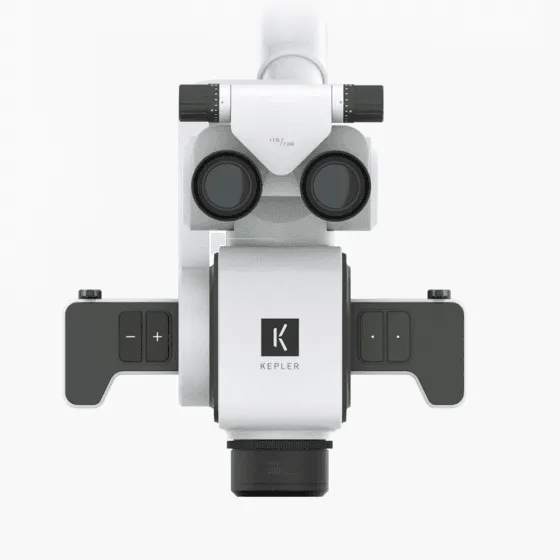
At Entwurfreich, this is core to our work. Our medical product development process is built on IEC 62366 and ISO 9241-210. Projects like the KEPLER dental microscope and the VALIA hospital system show how industrial design and regulatory compliance work together.
Interviews: Insights from Industry Leaders
Yuval Spector — Shell-Case (Israel)
Shell-Case develops miniaturised imaging sensors for medical devices. Spector discussed how smaller, cheaper sensors enable entirely new product categories — from swallowable cameras to disposable endoscopes. His view: the future of medical imaging is not bigger machines but smaller, smarter sensors embedded everywhere.
Dominic Liebscher — Siemens Healthineers (Germany)
Siemens Healthineers is one of the world's largest medical technology companies. Liebscher spoke about the convergence of AI, imaging and clinical data. His point: the value is no longer in the hardware alone. It is in the intelligence that connects devices, data and decisions.
Charles Qian — ChoiceMMed (China)
ChoiceMMed manufactures medical monitoring devices for global markets. Qian shared how Chinese medtech companies are closing the gap with Western competitors — not just in price, but in design quality and regulatory compliance. His take: the next generation of medical wearables will come from companies that understand both technology and user experience.
These three perspectives — from Israel, Germany and China — reflect how MEDICA brings together innovation from every corner of the world.
Report Preview
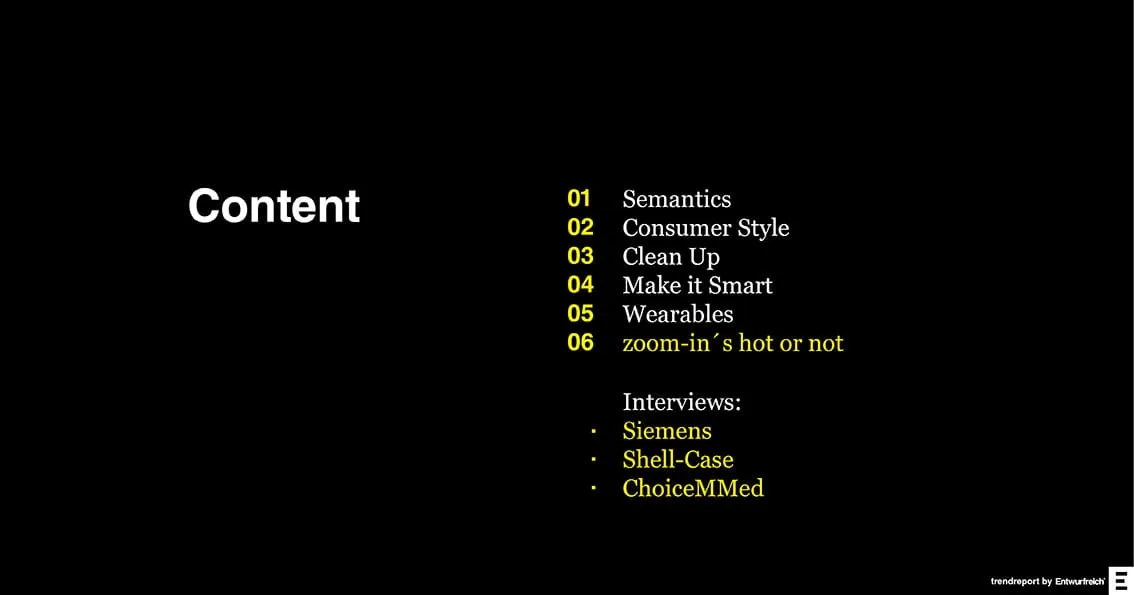
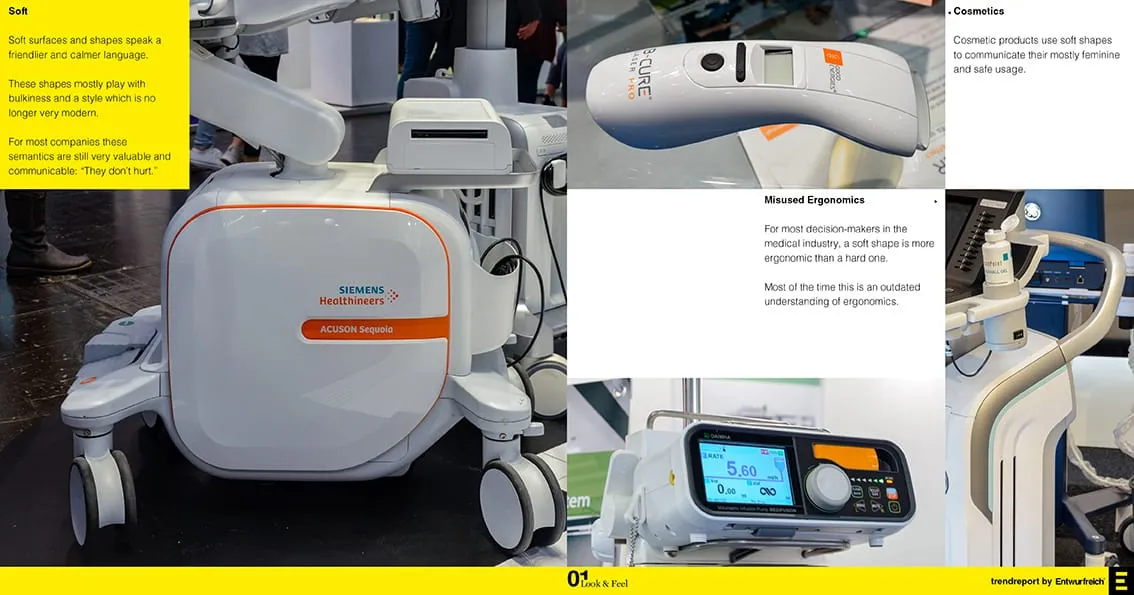
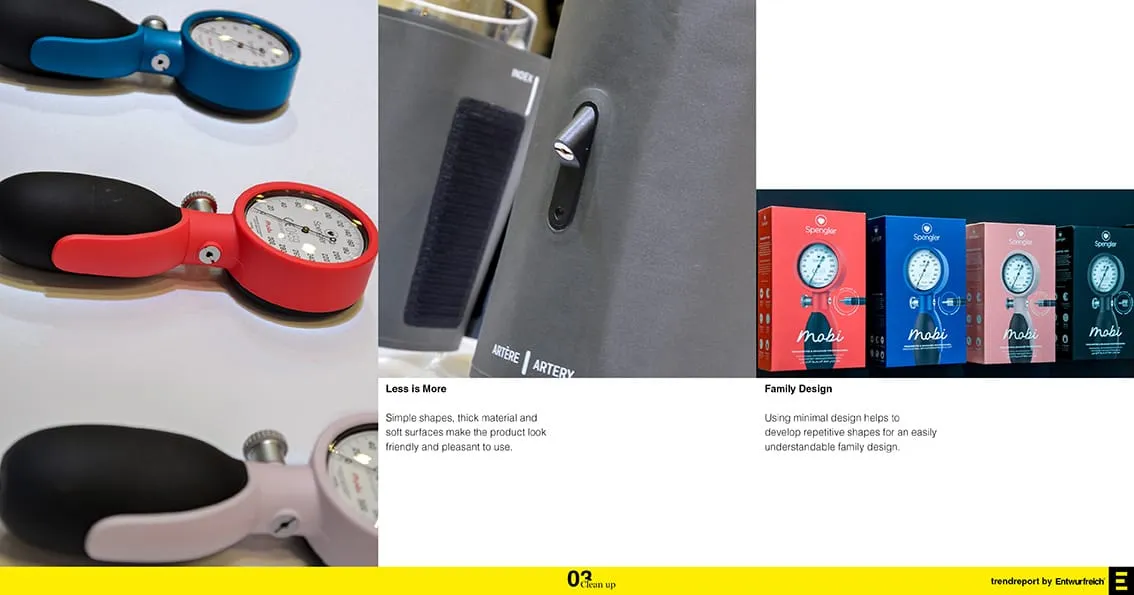
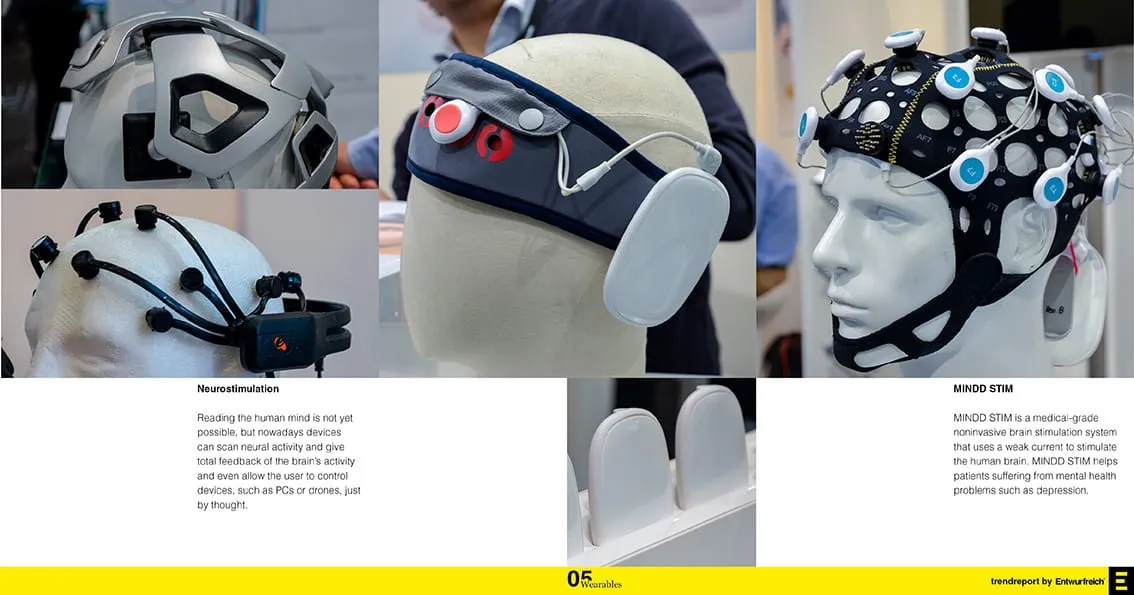
Our ZOOM-IN Trendreport captures the visual essence of MEDICA 2018. It covers all 17 halls at Messe Düsseldorf and the MEDICA Connected Healthcare Forum. The full report includes trend analyses with over 70 original photos, our Hot or Not feature, and complete interviews with Shell-Case, Siemens Healthineers and ChoiceMMed.
Why It Matters for Product Design
The trends from MEDICA 2018 go beyond healthcare. Digital platforms, AI-powered analysis, wearable sensors and user-centred design are forces that shape every product category. At Entwurfreich, medical device design is one of our core areas. Understanding where healthcare technology is heading helps us build better products across all sectors.
Our ZOOM-IN Trendreports turn these findings into clear insights for designers, product managers and decision-makers. Each report combines on-site photos, expert interviews and trend analysis in a compact format. Whether you are developing a medical device, a diagnostic tool or a health wearable, the macro trends from MEDICA can give you a real edge.
How These Trends Have Evolved Since 2018
Editor's note (2026): The five trends from MEDICA 2018 have transformed healthcare.
Digital health: Connected platforms are now the norm. Interoperability standards (FHIR) have matured. Hospital systems share data across institutions.
Wearable diagnostics: Medical-grade smartwatches are FDA-cleared. Continuous glucose monitors are mainstream. Remote patient monitoring has exploded post-pandemic.
AI imaging: Over 500 AI medical devices are now FDA-cleared (up from 29 in 2018). AI is standard in radiology workflows.
Point-of-care testing: The pandemic accelerated POCT adoption by a decade. Rapid antigen tests became a household item. The market has more than doubled.
User-centred design: IEC 62366 compliance is now strictly enforced under EU MDR 2017/745. Usability is no longer optional — it is a regulatory gate.
Entwurfreich tracks these shifts through our ZOOM-IN reports and through project work in medical device design, health wearables and industrial design.
Selected Projects
Frequently Asked Questions
What is MEDICA?
MEDICA is the world's largest medical trade fair. It takes place annually at Messe Düsseldorf, Germany, over four days in November. Founded in 1969, the fair covers the full spectrum of medical technology: from imaging and laboratory diagnostics to wearables, hospital equipment, IT systems and disposables. The 2018 edition drew over 120,000 visitors from 155 countries and featured 5,273 exhibitors (source: Messe Düsseldorf). It runs alongside COMPAMED, a dedicated fair for medical component suppliers. MEDICA is the key meeting point for manufacturers, hospitals, researchers and designers in the healthcare sector.
What were the main trends at MEDICA 2018?
Five trends stood out. (1) Digital health platforms connecting devices, data and clinical decisions — the digital health market was worth $96 billion in 2018. (2) Wearable diagnostics moving from fitness to medical-grade sensors — the market was valued at $8.5 billion. (3) AI in medical imaging, with 29 FDA-cleared AI products by end of 2018. (4) Point-of-care testing bringing lab results to the bedside in minutes — a $28.5 billion market. (5) User-centred medical design driven by IEC 62366 and the need to reduce use errors.
Who is Entwurfreich?
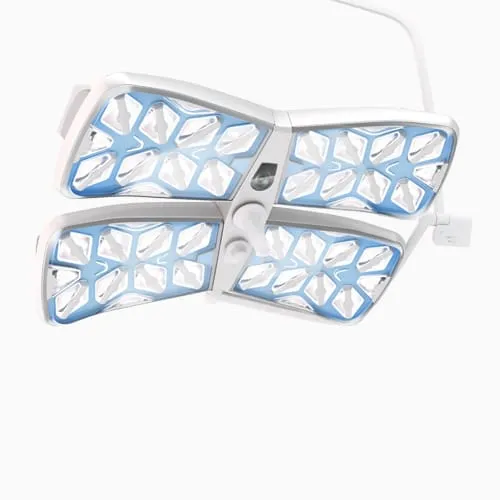
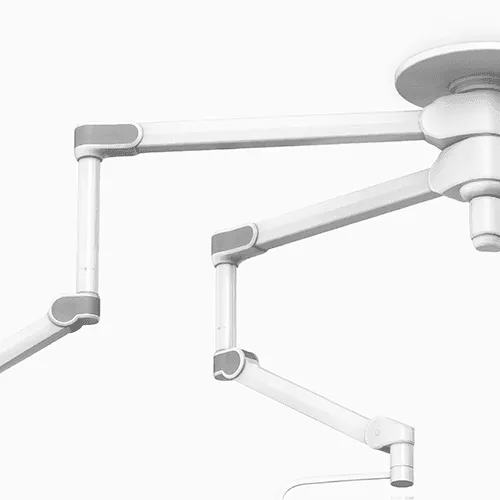
Entwurfreich is an industrial design agency in Düsseldorf, Germany. Founded in 2012, the team has done over 350 projects for 125+ clients including ABB, Vodafone, Henkel, Coca-Cola, Fujifilm and Covestro. Medical device design is a core competence — the agency works to IEC 62366, ISO 9241-210 and EU MDR 2017/745. Projects include the KEPLER dental microscope, APOLLO surgical lighting and the VALIA hospital pendant system. The ZOOM-IN Trendreports cover trends from fairs like MEDICA, ISH, Eurobike, IFA and Salone del Mobile. Recent awards: iF Design Award Gold 2024, Red Dot Best of the Best 2024, German Design Award Gold 2026. Learn more about our design process.
Written by Matthias Menzel · December 20, 2018