
Salone del Mobile.Milano 2026 — Milan, 21–26 April
Salone del Mobile 2026: When matter becomes the message
Some moments explain Salone del Mobile in one shot. Thursday morning at Rho. Buyers stream in. Within 30 minutes one thing is clear: this edition is different. Not loud. But denser. More substantial.
316,342 visitors. 167 countries. 1,900 exhibitors. 32 nations. The Salone del Mobile.Milano 2026 stays the world's number-one furniture fair. What sets it apart is not the size. It is the question it asks. In 2026 the question was: what happens when material is not the endpoint, but the start? Three days across the halls, Tortona and Brera yield five defining industrial design trends 2026 — with concrete results for makers.
1. "A Matter of Salone": materiality as the 2026 leitmotif
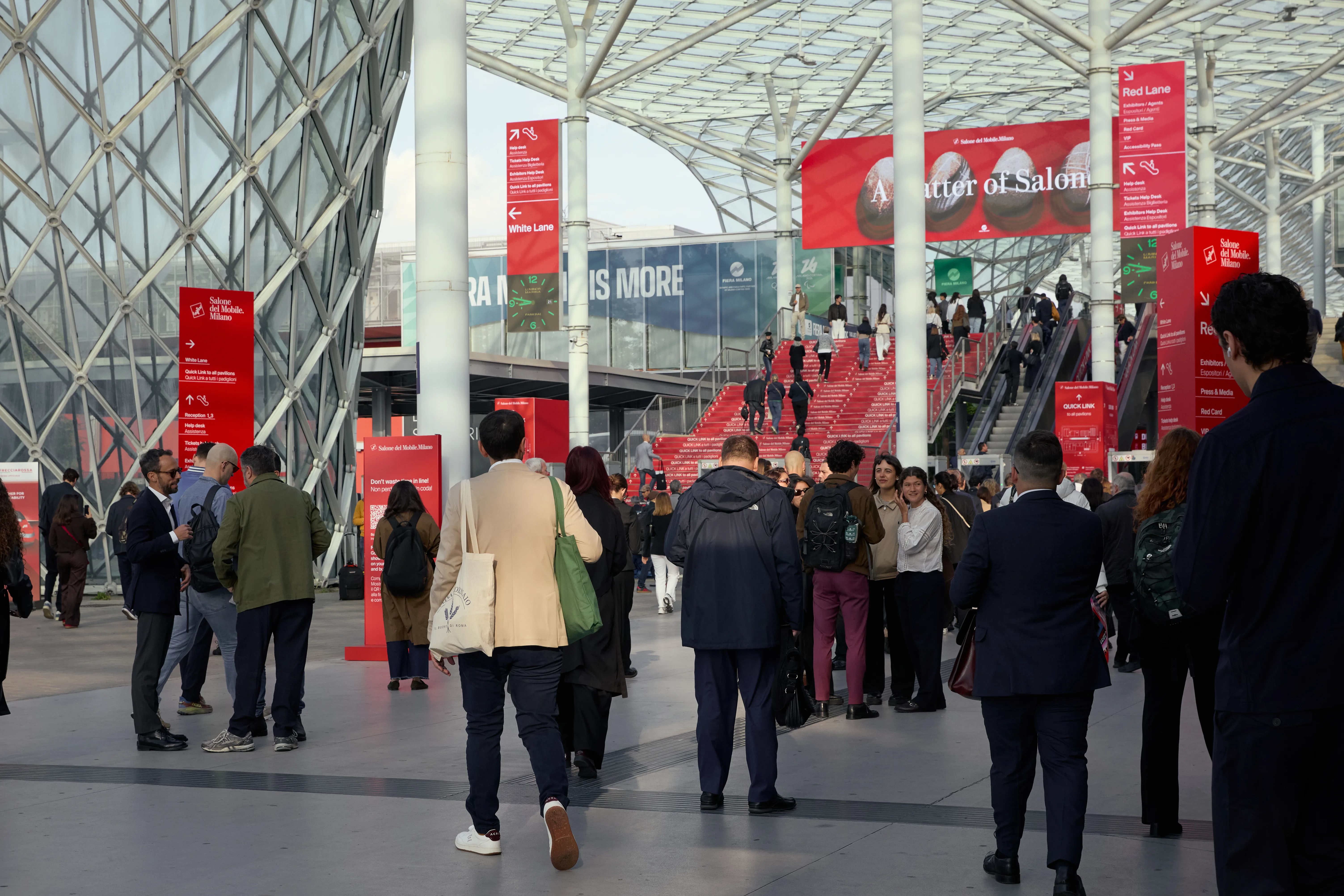
The 2026 theme is "A Matter of Salone". At any other fair this would be a slogan. Here it became a editorial line. Matter is no longer just a wrapper. Matter is now the start. It carries memory. It opens possibility. It tells stories.
On Via Tortona, Studiopepe made the case clearest. Arianna Lelli Mami and Chiara Di Pinto designed the Archiproducts Milano showcase. "Fòco. Living Notes" is the final chapter of their elements tetralogy. Fire as a generative force. Dark, burnished tones. Layered textures. Visitors stood for minutes, reading through the material to grasp what the designers thought.
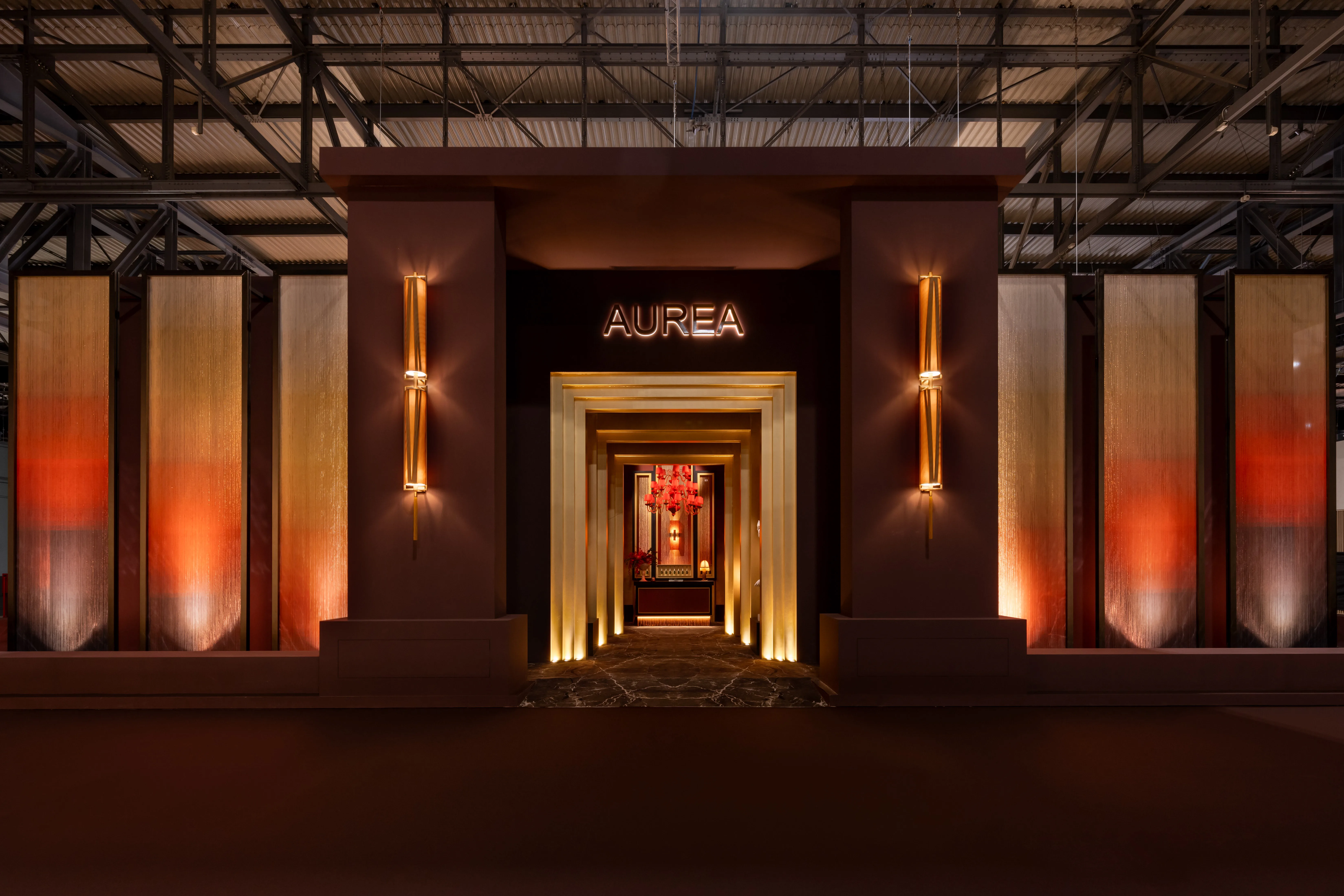
The second major gesture came from Maison Numéro 20. Founder Oscar Lucien Ono staged "Aurea" as architectural fiction. An imaginary hotel. Lush winter gardens. Surreal smoking lounges. Art Deco meets Eastern symbolism. The effect: a case for narrative depth in any space.
What materiality means for product development
Material and story are no longer separate. This is where Entwurfreich, an industrial design agency in Düsseldorf, has worked for years. CMF design (Color, Material, Finish) is not late-stage work. It is a core discipline. Every material choice is a story. Every finish speaks. Milan 2026 has now put this on stage.
2. Conversation pits & 1970s revival: furniture trends 2026
One gesture was unmissable: the comeback of conversation pits. Low, curved sectionals. Dedon, Minotti, Nii and Tacchini — all leaned into roomy, curved seating. They do not ask for a quick sit. They invite a longer stay. Cushions plush. Almost over-stuffed. The language: 1970s without irony.
Tacchini stood out. British designer Faye Toogood raided the brand's material archives. She built nine spatial tones — from deep green to calming stone. An installation as much for the touch as the eye. Minotti showed "Orion" by Giampiero Tagliaferri — a modular seating constellation on an aluminum frame. Pieces by GamFratesi, Nendo, Hannes Peer and Marcio Kogan. Dedon played with water-effect reflections and a green entrance.
What it means for designers and makers
This is more than retro nostalgia. The 1970s revival answers two decades of design fragmentation. In a world of digital distraction, the furniture industry now builds spaces for real encounter. That is a sociopolitical move, even if no one calls it that. For makers it means: longer dwell time. More material per unit. Higher demand on haptic and comfort qualities. Less reliance on formal disruption.
3. Orange & Mediterranean: 2026 color trends from the Salone
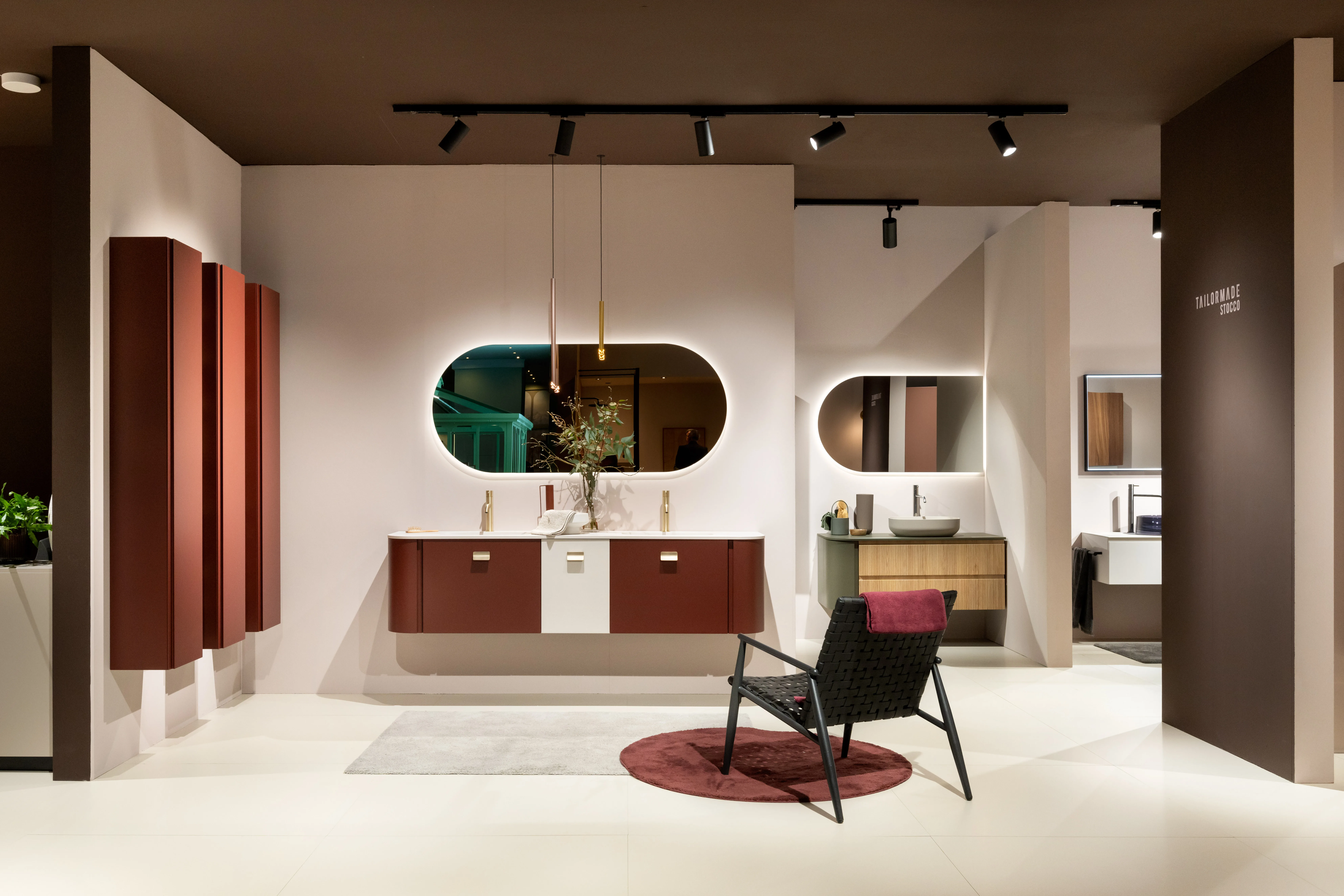
On color, 2026 was the year of orange. Not the quiet terracotta of recent seasons. Rich. Earthy. With a hint of Italian 1970s. Neutral palettes were still around. But many brands took on more expressive moods. Orange was the common thread.
In parallel, a strong Mediterranean and nautical influence ruled. Maritime materials came ashore. Mediterranean architecture moved into furniture surfaces. Weaving and craft reigned. This fits the larger material message: colors and textures that are tangible. That tell a story. That are anchored in a region.
What CMF briefs need to deliver today
An industrial design agency in Düsseldorf sees this shift every day. For the past 18 months, the change has been clear. In medical devices. In consumer goods. Clients ask for color systems that break with the global 2010s aesthetic. CMF briefs today are regional. Tactile. Emotional. Far less generic "premium minimal". Milan 2026 confirmed the shift.
4. EuroCucina 2026: dematerialization of kitchen technology
While the furniture halls celebrated matter, EuroCucina went the other way. 106 brands from 17 countries showed: high-tech withdraws aesthetically. The trend was dematerialization of technology. Hoods, fans, lighting were no longer technical functions. They became space-shaping elements.
Concretely: invisible induction surfaces. Controls integrated into surfaces. Tactile, ecologically advanced materials. FSC-certified wood. Antibacterial ceramics. Regenerated laminates. Reclaimed glass composites.
Where industrial design and UX/UI merge
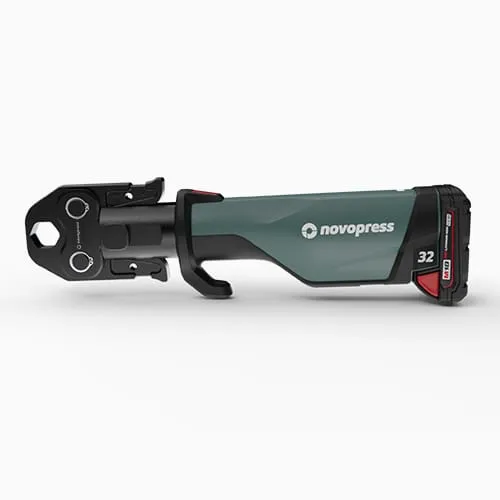
For industrial designers, this was the most exciting take of the fair. An induction surface that disappears is an engineering feat. But only if the design next to it is fully thought through. Control surfaces without buttons need new usability concepts. Affordances beyond classic GUI logic. Here industrial design and UX/UI design merge. This product class cannot be solved any other way. Our industrial design practice sees this daily — for instance in the smart NOVOPRESS 32 power tool.
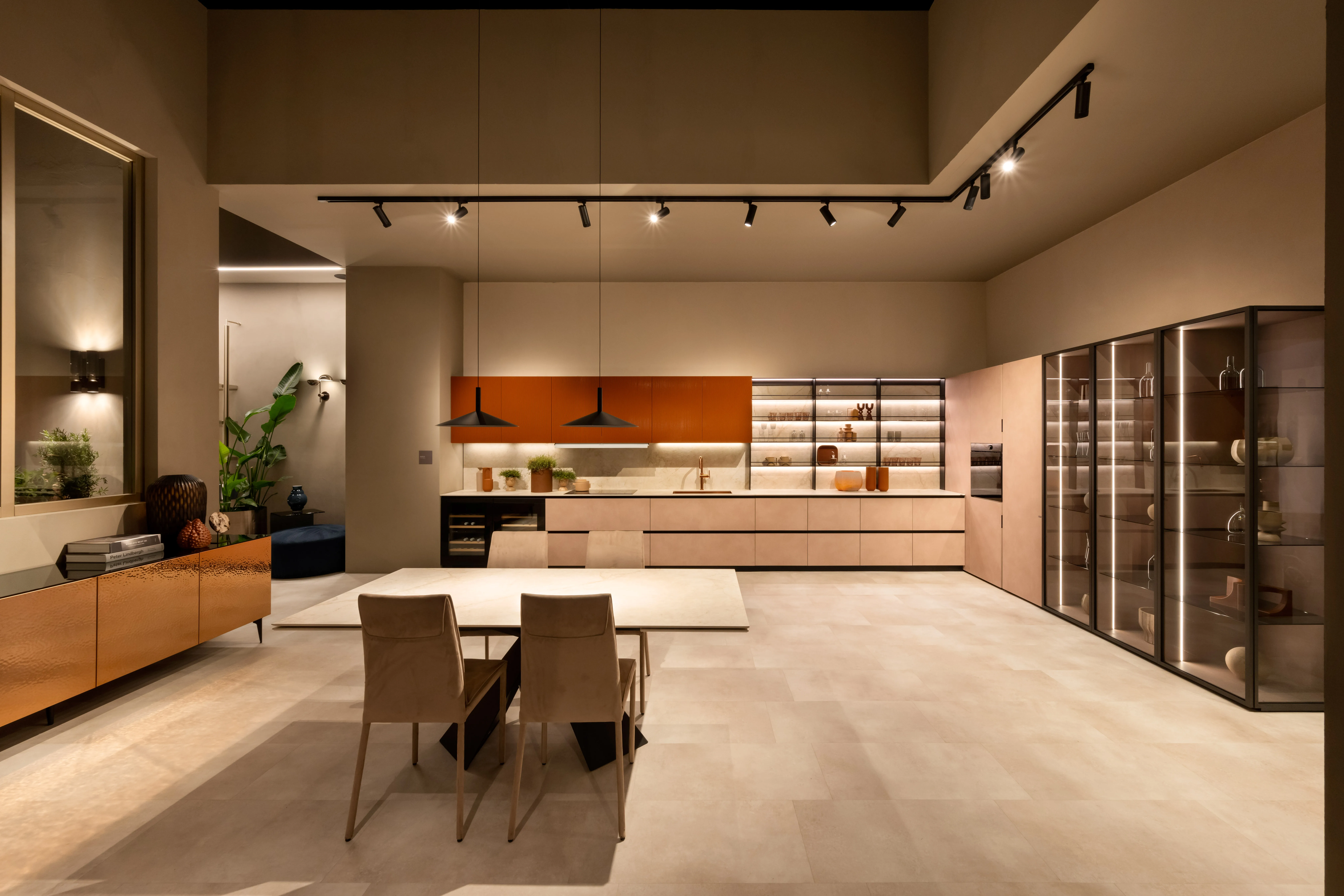
Marble is having a tech renaissance. Marble-effect high-tech surfaces look like stone. But they resist stains, scratches and heat. EuroCucina showed the stages: from natural marble to ceramic large-format slabs. To composite materials with 70% recycled content.
5. Sustainability & generative AI: industrial design trends 2026
Sustainability rules from 2026 — precise, not vague
Sustainability is no longer billboard politics. The official Salone communication for 2026 is clear: blanket labels are not enough. "Green", "responsible", "eco" do not cut it. The fair expects quantified statements. EPD certifications. Transparent paths. Circular design with tracked reuse rates. Brands taking this seriously made it visible — not in slogans, but in dense product data next to every chair. More on the EU Ecodesign Regulation in "What we talk about when we talk about sustainable design".
Generative AI as invisible design backbone
Generative AI is now mainstream in the design process. The Design Economy 2026 Report by Fondazione Symbola states: 94% of designers picked up AI skills in two years. At the fair this was visible between the lines. In quick form studies. In material variations only feasible with AI. In faster CMF curation. AI is not the buzzword of 2026. It is the quiet backbone.
Alongside, the debut of Salone Raritas. A dedicated platform for collectible design. Limited editions. Antiques. High-end craftsmanship. A smart move. The industrial halls discussed scaling and sustainability. Raritas made room for the other half of the market — singularity, longevity, collector value.
What remains from Salone del Mobile 2026
One sentence sums up 2026. The industry stopped thinking of material as the end product. Material is now the starting point. Studiopepe makes that case with fire. Tacchini with Toogood's tones. EuroCucina with invisible control logic. One coherent message to the discipline.
From the Düsseldorf perspective of Entwurfreich, an industrial design agency for medical, automotive and consumer-facing clients, this means: less hype shape. More investment in material, processing, experience, story. CMF design moves from end-stage to start. AI takes off quick work. What stays is the value judgment. And it lands at the material. That is what makes industrial design trends 2026 more than a season's note. It is a structural shift.
A telling moment: at one booth the espresso came on a counter of recycled glass composite. The veining looked like stone. The material weighed half. It was 78% recycled. Right there Milan 2026 was at peace with itself: material that is more than what it appears to be.
Selected Projects
FAQ — Salone del Mobile 2026
When does Salone del Mobile 2026 take place?
Salone del Mobile.Milano 2026 ran from 21 to 26 April 2026 at Fiera Milano Rho. The next edition is planned for April 2027. Exact dates usually appear in late summer on the official Salone website.
What was the leitmotif of Salone 2026?
The official theme was "A Matter of Salone". It put materiality at the center. Material as starting point, not endpoint. Sustainability, transformation and narrative material work were the editorial focus.
Which color trends ruled Salone del Mobile 2026?
Orange was the signature color of the fair. Rich. Earthy. With an Italian 1970s reference. Plus Mediterranean and nautical palettes. Neutral tones stayed present. But more expressive colors with haptic surfaces shaped the picture markedly.
What was new at EuroCucina 2026?
EuroCucina 2026 with 106 brands from 17 countries showed the dematerialization of kitchen technology. Invisible induction. Integrated controls. Marble-effect composites with up to 70% recycled content. Materials like FSC wood, antibacterial ceramics and recycled laminates.
What role does generative AI play in industrial design 2026?
The Design Economy 2026 Report says 94% of designers picked up AI skills over two years. At the Salone, generative AI was invisible backbone. Iterative form studies. Broad material variations. Faster CMF curation. AI augments human value decisions. It does not replace them.
Which industrial design trends 2026 are most relevant for makers?
Four results emerge. (1) CMF design moves from end-stage to start of product development. (2) Buttonless control surfaces require merged industrial-design and UX/UI concepts. (3) Sustainability needs quantified data, not blanket labels. (4) Material innovation becomes a edge beyond form.
Image credits: © Salone del Mobile 2026 / Press Archive. All installations, booths and materials shown were documented during Salone del Mobile.Milano 2026.
Written by Simon Gorski · April 29, 2026