
Why User Confidence Is the Most Underrated Business Metric
Confident Users Buy More, Stay Longer and Recommend You
Why Does User Confidence Matter for Business?
Good design empowers the user. The more confident they feel, the more they use the product. Confidence is addictive like that.
65% of CEOs now view customer trust as more vital to business success than product innovation or quality (source: PwC). Customer-obsessed organisations report 41% faster revenue growth and 49% faster profit growth (source: Forrester). Increasing customer retention by just 5% can boost profits by 25-95%.
The connection is simple. A user who feels confident makes fewer support calls, returns fewer products, recommends the brand to others and upgrades when the next version arrives. A user who feels confused does the opposite. For product managers, this means confidence is not a soft metric. It is the single strongest predictor of commercial success.
The Psychology Behind Confident Design
Confidence is not magic. It is built on three psychological principles that designers can apply deliberately.
Affordance. A product should communicate how to use it through its form. A door handle invites pulling. A button invites pressing. When the physical shape matches the expected action, the user feels in control. Don Norman calls this the most fundamental principle of interaction design.
Cognitive load reduction. The brain simplifies what it sees. Too many options, too many buttons, too many steps — all create doubt. Minimalist design is not just aesthetics. It is a cognitive strategy. Every element you remove is a decision the user no longer has to make.
Feedback. Users need to know that their action worked. A click sound, a vibration, a light change — these micro-confirmations tell the brain: you did it right. Without feedback, even correct actions feel uncertain.
Three Design Principles That Build Confidence
1. How does ease of use build confidence?

When a product is simple to use, something interesting happens. The user looks competent. Everyone knows the moment — you show someone a new device and say: try it. If it works instantly, you look like you discovered something special.
The iPhone proved this in 2007. For years, tech executives carried PDAs from Palm and BlackBerry. Clunky, ugly, not intuitive. When Apple launched the iPhone, the ease of use settled the competition. Tap, call, text, play music. No menus, no folders. Because it was intuitive, users felt confident doing more than ever before.
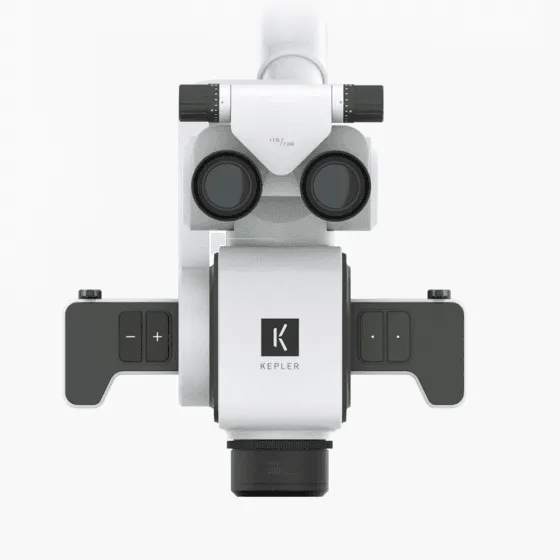
The principle applies far beyond smartphones. A power tool that a technician masters in minutes. A light switch that needs no manual. A dental microscope that a surgeon trusts on first use. Ease of use is the fastest path to adoption.
2. Why does personalisation create loyal users?

Shoes used to be a custom product. You visited a cobbler who measured your feet. The result: a bespoke pair, timeless and unique, worth every penny.
NIKE brought this back with NIKE By You. Customers choose materials, colours and accents for their own Air Force Ones. One design, one customer, as unique as it gets. People walk taller when they own what no one else has.
80% of consumers are more likely to buy from brands that offer personalised experiences (source: Epsilon). Personalisation works because it gives the user agency. They are no longer choosing from a menu. They are building something that reflects who they are. This principle scales from sneakers to smart home interfaces — products that adapt to individual preferences feel like they were made for you.
3. How does perceived quality justify investment?

Why would anyone buy a $400 blender? Because Vitamix is trusted by professional chefs. Robust components, reliable performance, simple interface. The question 'will this work?' never comes up. It works every time.
Dyson applied the same logic to vacuum cleaners. The transparent dust bin is not just functional. It is a confidence signal — you can see the product working. The engineering is visible. The investment feels justified.
Perceived quality is built through material choice, weight, sound, haptics and visual feedback. A premium surface finish, a satisfying click, a solid weight in the hand — these signals tell the brain: this product was made with care. And if it was made with care, it will work well.
In B2B, the stakes are even higher. A medical device must inspire confidence in life-critical situations. The IEC 62366 standard for usability engineering exists precisely because user confidence in medical products is not optional — it is a safety requirement.
How Does User Confidence Apply to B2B and Medical Products?
User confidence is not just a consumer topic. It matters in every sector.
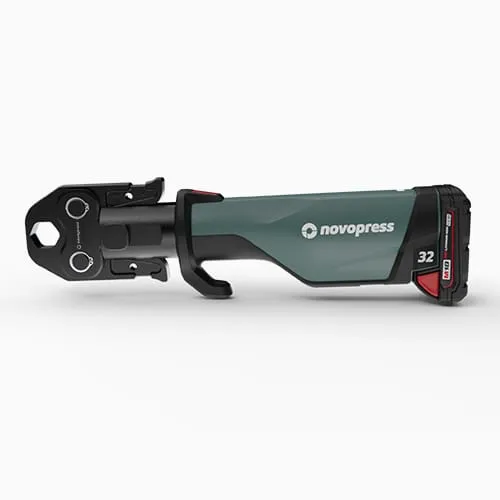
In industrial tools, a pressing machine that gives clear feedback — LED status, haptic confirmation, intuitive controls — reduces errors and training time. The Novopress 32, which we designed for our client, was built with exactly this in mind.
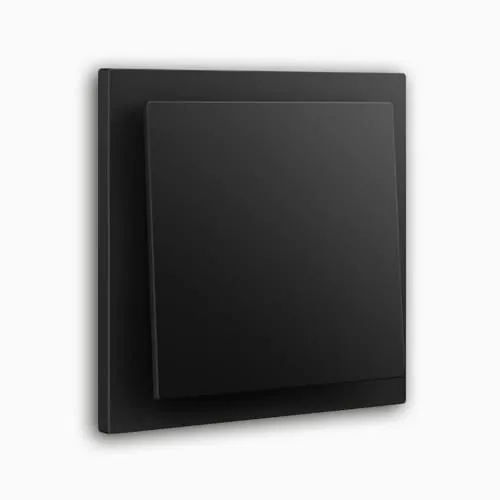
In building technology, a switch system must be installed by electricians and used by residents. Two audiences, two sets of expectations, one product. The Busch-art linear, which we developed for Busch-Jaeger, addresses both.
In medical devices, confidence can be life-critical. A surgeon who hesitates because the interface is unclear puts the patient at risk. The IEC 62366 standard makes usability engineering mandatory — 80% of medical device recalls are linked to usability issues (source: FDA). We covered this in depth in our article on medical product development.
The common thread: when users trust the product, they perform better. And when they perform better, the business benefits.
What Can an Industrial Design Agency Contribute?
User confidence is not a feature you add at the end. It is a result of every design decision — from the first sketch to the final surface finish.
As an industrial design agency, Entwurfreich builds confidence into products from day one. We combine user research, ergonomic analysis, material expertise and interaction design into a process that puts the user at the centre. Not as a buzzword, but as a method.
Our approach connects to empathetic product design — understanding not just what users need, but how they feel. Because a product that works perfectly but feels wrong will never build confidence.
Through the go-inno programme, eligible SMEs can receive up to 50% public funding on our consulting services.
Selected Projects
Frequently Asked Questions
What is user-centred design?
User-centred design (UCD) is a design methodology that places the end user at the centre of every decision. It involves understanding user needs through research, testing prototypes with real users and iterating based on feedback. The ISO 9241-210 standard defines UCD as a framework for interactive systems. In industrial design, UCD means designing products that are intuitive, safe and confidence-building — from the physical form to the interface. At Entwurfreich, UCD is the foundation of our design process. We apply it across sectors from consumer products to medical devices, always with the goal of making users feel capable and in control.
How do you measure user confidence?
User confidence can be measured through several methods. Net Promoter Score (NPS) captures willingness to recommend — Promoters have 600-1,400% higher lifetime value. Task completion rate measures how often users succeed without help. Time-on-task shows how quickly users achieve their goals. Error rate reveals where confidence breaks down. Qualitative interviews uncover emotional responses. The most effective approach combines quantitative metrics with qualitative user research. Companies with strong user confidence scores grow revenue 1.5-2x faster than competitors.
Who is Entwurfreich?
Entwurfreich is an industrial design agency in Düsseldorf, Germany. Founded in 2012, the team has completed over 350 projects for 125+ clients including ABB, Vodafone, Henkel, Coca-Cola, Fujifilm and Covestro. The agency specialises in designing products that build user confidence — from intuitive power tools and smart home interfaces to medical devices compliant with IEC 62366. Recent awards: iF Design Award Gold 2024, Red Dot Best of the Best 2024, German Design Award Gold 2026. Learn more about our design process.
Written by Simon Gorski · April 28, 2023