
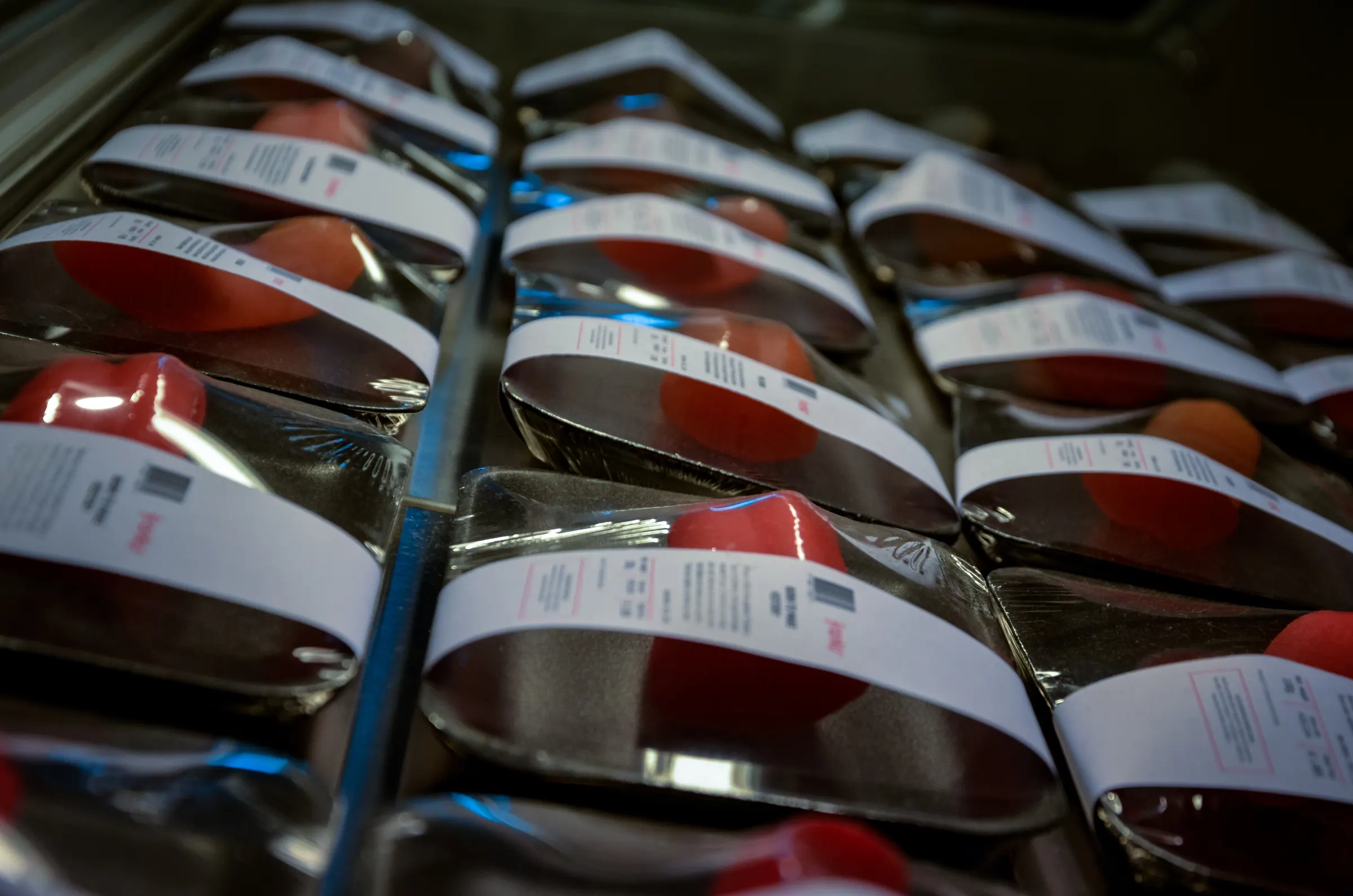
Dutch Design Week 2018 — Eindhoven, October 20–28
If Not Us, Who?
Dutch Design Week 2018 was built on optimism. The motto — "If not us, who?" — reflected a belief that designers can solve real problems. The event drew over 335,000 visitors and featured 2,500 designers at 100+ locations across Eindhoven (source: DDW). Since Eindhoven is just around the corner from our Düsseldorf headquarters, we spent an intense day at DDW 2018.
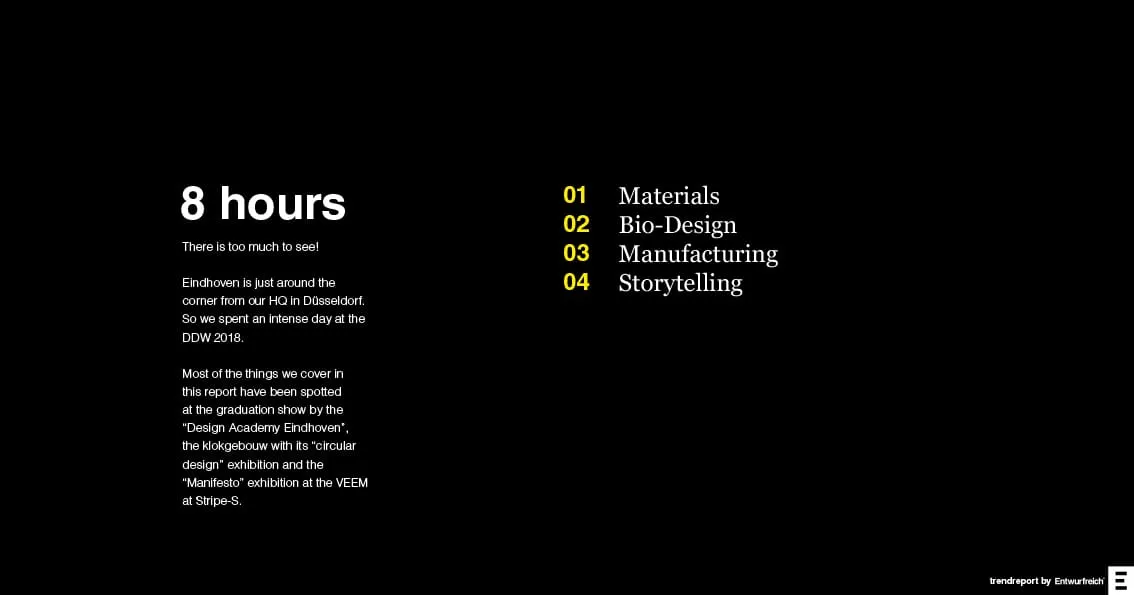
Most of what we cover in this report was spotted at three key venues: the graduation show at the Design Academy Eindhoven, the Klokgebouw with its circular design exhibition, and the Manifesto exhibition at VEEM in Strijp-S. At Entwurfreich, events like DDW feed directly into our industrial design work. This ZOOM-IN Trendreport captures the most compelling exhibits.
Five Key Trends at DDW 2018
1. How Is Circular Design Moving from Theory to Practice?
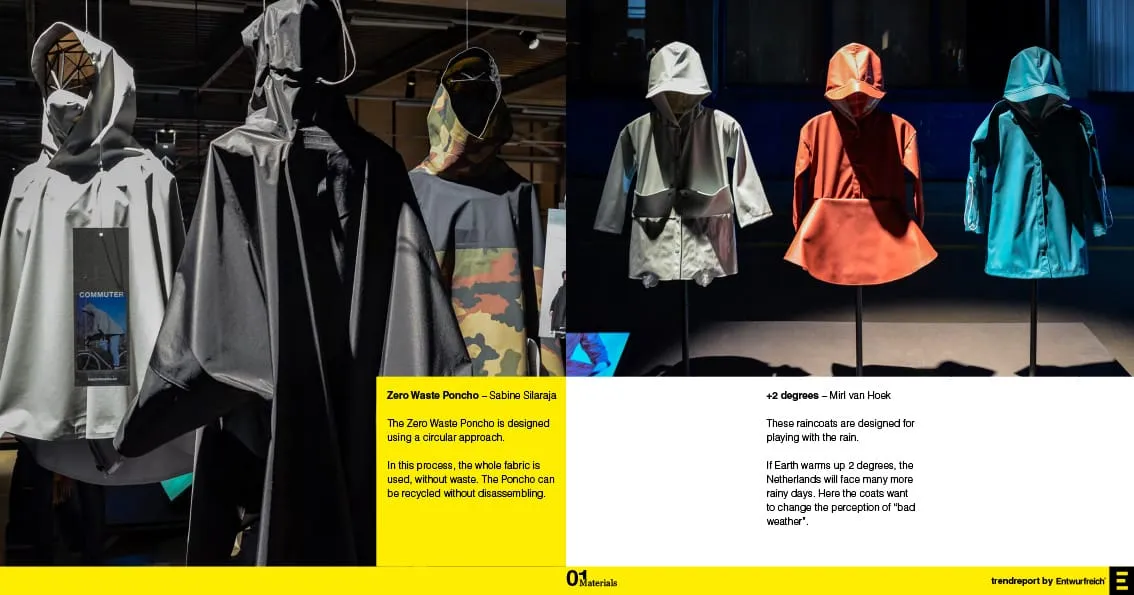
Circular design was the central theme at DDW 2018. Not as an abstract idea, but as hands-on work. Designers showed furniture made from demolition waste, packaging from agricultural by-products and textiles from recycled ocean plastic.
The Klokgebouw hosted a dedicated circular design exhibition. Dave Hakkens — founder of Precious Plastic, based in Eindhoven — showed open-source machines that turn waste plastic into new products. Studio Drift presented large-scale installations from recycled industrial materials. The global circular economy was valued at $260 billion in 2018, growing at 8% annually (source: Accenture). For product designers, circularity means thinking about end-of-life before day one. We explored this in our article on sustainable design principles.
2. How Are Designers Experimenting with New Materials?
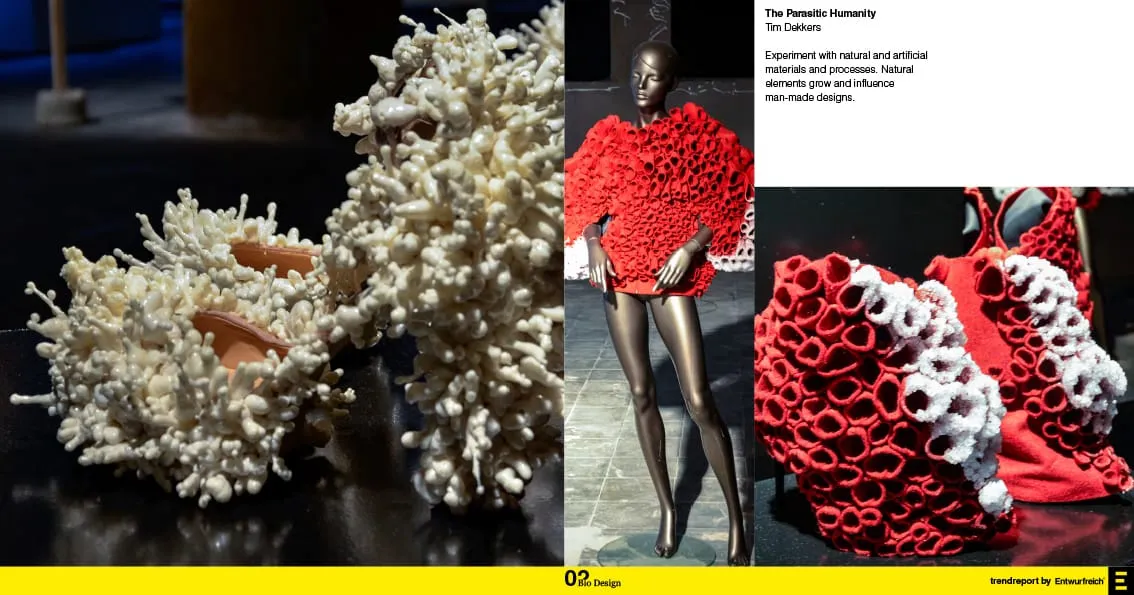
Material innovation was everywhere. Designers at the Design Academy graduation show presented materials grown from mycelium, fermented from bacteria, 3D-printed from algae and woven from food waste fibres.
This is not lab science. These are functional prototypes. Chairs you can sit on. Lamps that light up. Shoes you can wear. The message: the materials of the future may not come from factories. They may come from nature. The global bio-based materials market was valued at $78 billion in 2018 (source: European Commission). For designers who work with smart textiles and 3D-printed wearables, DDW was a source of inspiration.
3. How Is Design Tackling Social Challenges?
DDW 2018 showed design as a tool for social change. Exhibits addressed refugee integration, loneliness in ageing populations, food inequality and mental health. The Design Academy graduation show featured projects that were more social research than product design.
This reflects a broader shift. Designers are not just making things look good. They are making things work for people who need them most. The global social enterprise sector exceeded $2 trillion in 2018 (source: British Council). For industrial designers, social engagement means new briefs. How do you design for a user who has nothing? How do you make a product that works without infrastructure?
4. Why Is Craft Making a Comeback?
Handmade quality was a strong theme at DDW 2018. In a world of mass production, designers are rediscovering the value of craft. Hand-blown glass, hand-woven textiles, hand-carved wood — shown alongside CNC-milled parts and 3D-printed components. The global handcraft market reached $718 billion in 2018 (source: Allied Market Research).
Formafantasma — the Italian-Dutch duo based in Eindhoven — showed work that combined geological research with hand-finished materials. Simone Post presented rugs made from recycled Nike sneakers. The combination is powerful. Digital tools make complex forms affordable. The human hand adds emotional value. At DDW, the best exhibits combined both: precision where it matters, imperfection where it charms. This connects to how we think about empathetic product design — products that feel human, not machine-made.
5. How Does Design Become Activism?
The Manifesto exhibition at VEEM in Strijp-S showed design as provocation. DDW 2018 featured over 40 activist design projects across three venues (source: DDW programme). Objects that question consumption. Installations that confront climate change. Furniture that challenges gender norms. Designers like Marjan van Aubel showed solar-powered furniture that doubles as energy infrastructure.
This is not commercial design. It is design as a medium for debate. For product designers, activist design is a reminder. Every object carries a message — whether intended or not. The choice of material, the manufacturing process, the price point, the packaging — all communicate values. DDW 2018 made this visible. The most powerful exhibits were not the prettiest. They were the ones that made you think.
Report Preview
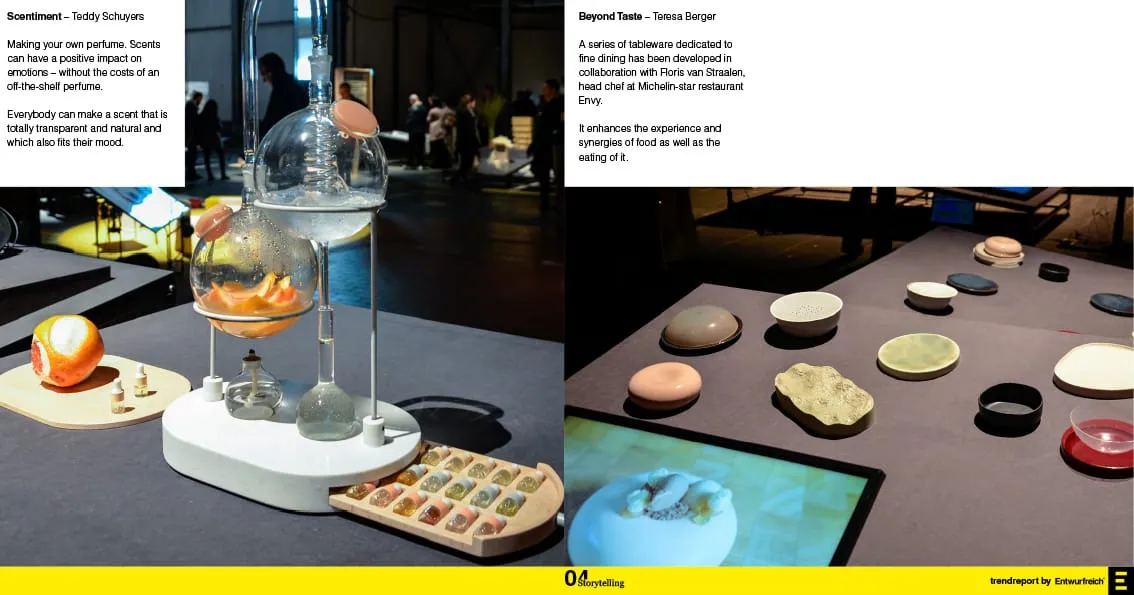
Our ZOOM-IN Trendreport captures the visual essence of Dutch Design Week 2018. It covers the Design Academy graduation show, the Klokgebouw circular design exhibition and the Manifesto at VEEM in Strijp-S. The full report features over 50 original photos and our curated selection of the most compelling exhibits.
Why It Matters for Product Design
DDW is not a trade fair. It is a design festival. The ideas shown here are raw, experimental and often years ahead of the market. But they signal where design is heading. Circular thinking, bio-materials, social impact and craft-tech fusion are forces that will shape every product category. At Entwurfreich, DDW is essential input for our long-term thinking.
Our ZOOM-IN Trendreports turn these observations into clear insights for designers, product managers and decision-makers. Each report combines on-site photos and trend analysis in a compact format. Whether you are planning a product strategy or exploring new materials, the ideas from DDW can spark real change.
How These Trends Have Evolved Since 2018
Editor's note (2026): The five trends from DDW 2018 have become mainstream forces.
Circular design: EU regulations now require digital product passports and design for disassembly. What was experimental in 2018 is now law.
Material experimentation: Mycelium packaging is commercially available. Bio-based materials are scaling. 3D-printed furniture is entering production.
Social engagement: Impact-driven design studios have doubled since 2018. Design for underserved communities is now taught at every major design school.
Craft revival: The combination of CNC precision and hand-finishing is standard in premium product design.
Design as activism: Climate-conscious design is now a client expectation, not a fringe movement.
Entwurfreich tracks these shifts through our ZOOM-IN reports and project work in smart textiles, 3D-printed wearables and sustainable design. We also covered DDW 2019 in a separate trendreport.
Selected Projects
Frequently Asked Questions
What is Dutch Design Week?
Dutch Design Week (DDW) is Europe's largest design event. It takes place annually in Eindhoven, the Netherlands, over nine days in October. The 2018 edition drew over 335,000 visitors and featured 2,500 designers at 100+ locations (source: DDW). Unlike trade fairs, DDW focuses on experimental and conceptual design — graduation shows, research labs, installations and maker workshops. It covers product design, social design, food design, digital design and architecture.
What were the main trends at DDW 2018?
Five trends stood out. (1) Circular design moving from theory to practice — waste streams becoming design inputs in a $260 billion circular economy. (2) Material experimentation with mycelium, bacteria and algae — the bio-materials market was $78 billion. (3) Design for social impact — tackling inequality, migration and mental health. (4) Craft revival combining handmade quality with digital tools. (5) Design as activism — objects that provoke debate rather than just serve function.
Who is Entwurfreich?
Entwurfreich is an industrial design agency in Düsseldorf, Germany. Founded in 2012, the team has done over 350 projects for 125+ clients including ABB, Vodafone, Henkel, Coca-Cola, Fujifilm and Covestro. The ZOOM-IN Trendreports cover trends from events like DDW, Salone del Mobile, IFA, Eurobike, ISH, MEDICA and BAU. Recent awards: iF Design Award Gold 2024, Red Dot Best of the Best 2024, German Design Award Gold 2026. Learn more about our design process.
Written by Matthias Menzel · December 8, 2018