
MWC 2019 — Barcelona, February 25–28
The Starting Signal for a New Mobile Era
After years of rumours and prototypes, MWC 2019 in Barcelona finally delivered the starting signal for 5G and foldable displays. The GSMA reported over 109,000 visitors from 198 countries (source: GSMA). More than 55% held senior-level roles, including 7,900 CEOs. This was not just a tech showcase. It was a strategic decision-making forum.
But 5G and foldable screens were only the headline acts. Behind them, a broader shift was taking shape. AI-driven camera systems, standalone AR/VR headsets, mobile payments and new IoT devices all made waves. At Entwurfreich, we attend trade fairs across industries. These range from the ISH in Frankfurt to Dutch Design Week in Eindhoven. We use them to spot the design trends that shape our industrial design work. This ZOOM-IN Trendreport captures the key developments from MWC 2019.
Five Key Trends at MWC 2019
1. How Is 5G Changing the Rules of Connectivity?
5G was the star of MWC 2019. Qualcomm, Huawei, Samsung and Ericsson all showed live 5G network demos. Operators like Vodafone, Deutsche Telekom and SK Telecom announced commercial launch dates for the second half of 2019. The promise: download speeds up to 20 Gbps, latency below 1 millisecond. Plus the capacity to connect up to one million devices per square kilometre (source: GSMA 5G report).
For product designers, 5G is not just about faster phones. It enables entirely new product categories. Real-time remote surgery, autonomous vehicle communication and cloud-rendered AR all become viable. This happens when latency drops below the threshold of human perception. The design challenge shifts from working around connectivity limits to designing for always-on, high-bandwidth environments.
2. What Do Foldable Displays Mean for Product Design?
Samsung's Galaxy Fold and Huawei's Mate X were the most photographed devices at the fair. No surprise there. After a decade of small updates to the rigid slab form factor, foldable OLED displays brought the first real disruption since the original iPhone.
Samsung chose an inward fold with a 7.3-inch flexible AMOLED main display. It also had a smaller 4.6-inch outer screen, priced at $1,980 (source: Samsung). Huawei went the other way: an outward fold with a single 8-inch display. It serves as both front and back cover, at $2,600 (source: Huawei). Both devices showed that the premium smartphone segment was ready to move beyond the slab.
These devices raise key questions for industrial designers and UX professionals. How do you design interfaces that shift smoothly between phone and tablet sizes? How do you handle the crease? What happens to cases, screen protectors and the whole accessory ecosystem? The foldable category was still in its early stages in 2019. But the direction was clear: the smartphone form factor is no longer fixed.
3. How Is AI Reshaping Smartphone Cameras?
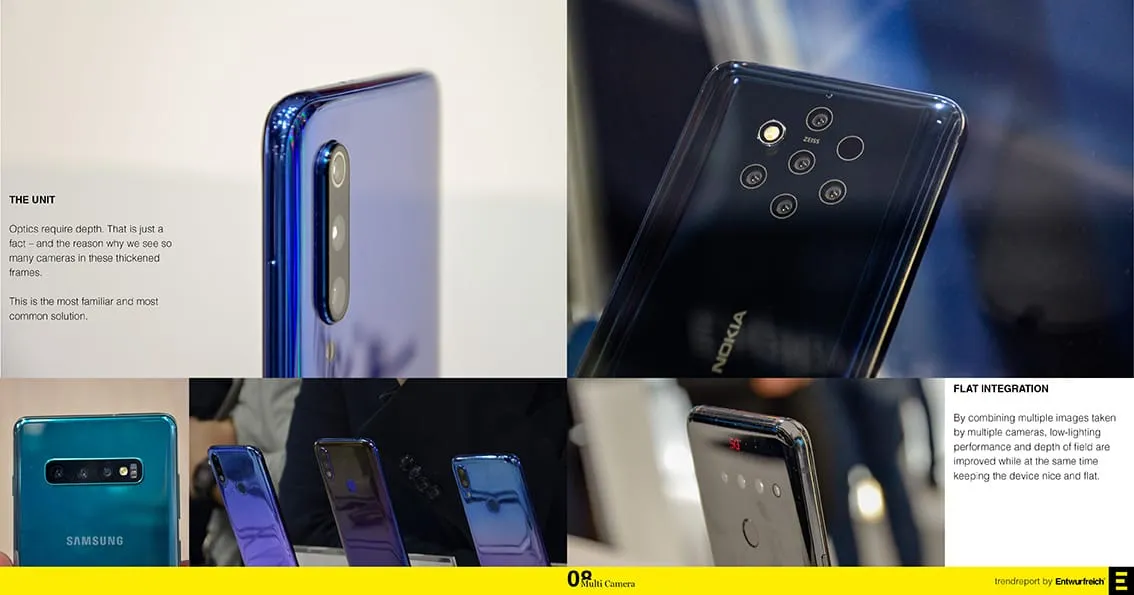
The camera arms race shifted from hardware specs to computational intelligence. Manufacturers no longer competed on megapixel counts alone. At MWC 2019, they showed AI-powered features that change what a smartphone camera can do. These include real-time scene recognition that adjusts exposure, focus and colour balance. Night mode algorithms now produce usable images in near-darkness. Background segmentation enables portrait effects that once needed dedicated depth sensors.
Oppo showed a 10x hybrid zoom system using a periscope lens. It covers a focal range of 15.9–159 mm. AI stabilisation delivers telephoto-grade results in a device under 10 mm thick. Nokia unveiled the 9 PureView with five rear cameras and a 240-megapixel composite sensor. This pushed computational photography to its logical extreme.
For product designers working on camera-equipped devices beyond smartphones, these advances signal a clear shift. From medical imaging tools to industrial inspection systems, the value now lies in the software pipeline, not the optical assembly.
4. Why Are AR and VR Going Mobile?
MWC 2019 marked a turning point for immersive technologies. Microsoft unveiled the HoloLens 2 at $3,500. It features a 52-degree field of view — more than double the original. Fully articulated hand tracking replaces controllers with natural gestures (source: Microsoft). The device targeted enterprise uses like remote assistance, training and surgical planning.
Several manufacturers also showed standalone VR headsets. These run on Qualcomm's Snapdragon XR platform and need no tethered PC. The link to 5G matters here. Low-latency, high-bandwidth mobile networks make cloud-rendered AR and VR viable for the first time. This cuts the processing power, weight and heat needed in the headset.
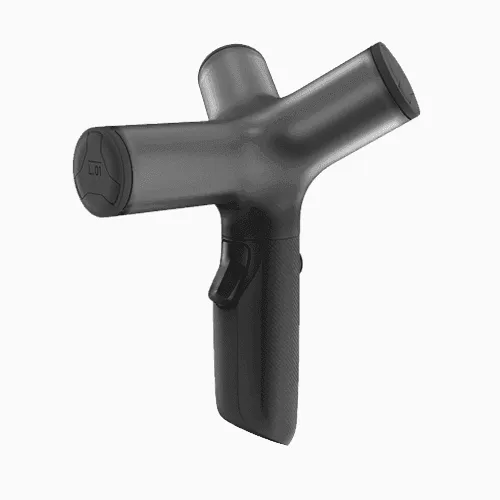
For designers at Entwurfreich, this mix of wearable ergonomics, spatial interaction and mobile connectivity is one of the most exciting design challenges ahead. We also explore this through projects like our mixed reality controller.
5. How Are Mobile Payments Reshaping Financial Services?
Mobile payment technology moved beyond simple contactless transactions at MWC 2019. Mastercard — one of our interview partners in this report — showed biometric payment cards. These authenticate via fingerprint directly on the card, removing the need for a PIN. Chinese tech giants showed facial recognition payment systems already deployed at scale. Alipay was processing over 1.7 billion transactions daily at the time (source: Ant Financial 2019 report).
The broader trend: the smartphone is becoming a universal identity and payment device. Biometric authentication is replacing passwords and PINs. This spans banking, transport and access control. The global mobile payment market was valued at roughly $1.18 trillion in 2019. Projections exceeded $4.7 trillion by 2025 (source: Allied Market Research).
For product designers, this creates new challenges around trust, transparency and feedback. How do you make an invisible transaction feel secure? How do you design physical touchpoints for a digital-first payment experience? These questions grow more relevant as empathetic design principles move into financial product interfaces.
Interviews: Insights from Industry Leaders
Raja Rajamannar — Mastercard
Raja Rajamannar is Chief Marketing and Communications Officer at Mastercard. He shared how mobile technology is changing the link between consumers and financial services. His key insight: the future of payments is not about the payment itself. It is about creating seamless, invisible experiences. The transaction should disappear into the background of the user journey.
Franko Fischer & Evagelos Salvuras — Wiko
Wiko is a French-Algerian smartphone brand. It built its market position on accessible design and competitive pricing. Fischer and Salvuras discussed how mid-range phones are closing the gap with flagships. Camera quality and build materials keep improving. Design sets brands apart more than ever as hardware specs converge.
Sarper Silaoglu & Istem Yildiran — Boni
Boni is rethinking how children use mobile technology. Silaoglu and Yildiran showed their approach to designing connected devices for young users. They balance engagement with safety, and screen time with physical play. This growing market segment demands very different design principles from adult-oriented devices.
Alexander McGregor — Oppo
Oppo's European expansion was a major story at MWC 2019. McGregor discussed the company's design philosophy. He explained how Oppo stands out through camera innovation, including the 10x hybrid zoom that drew crowds at their booth. His take: in a market of similar-looking slabs, the camera experience is the primary brand differentiator.
Report Preview
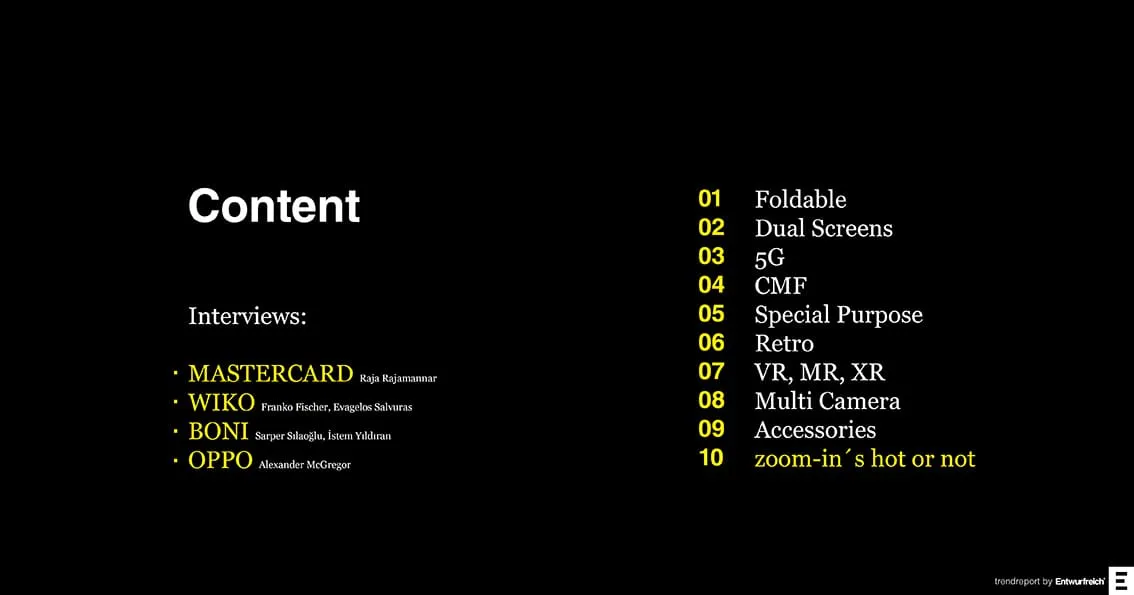
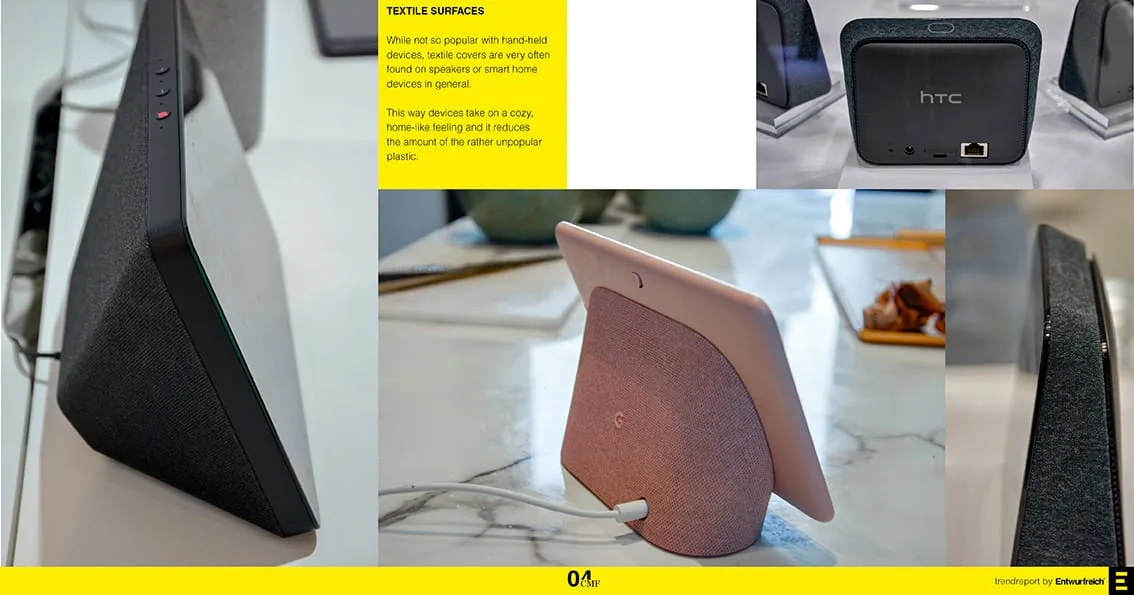
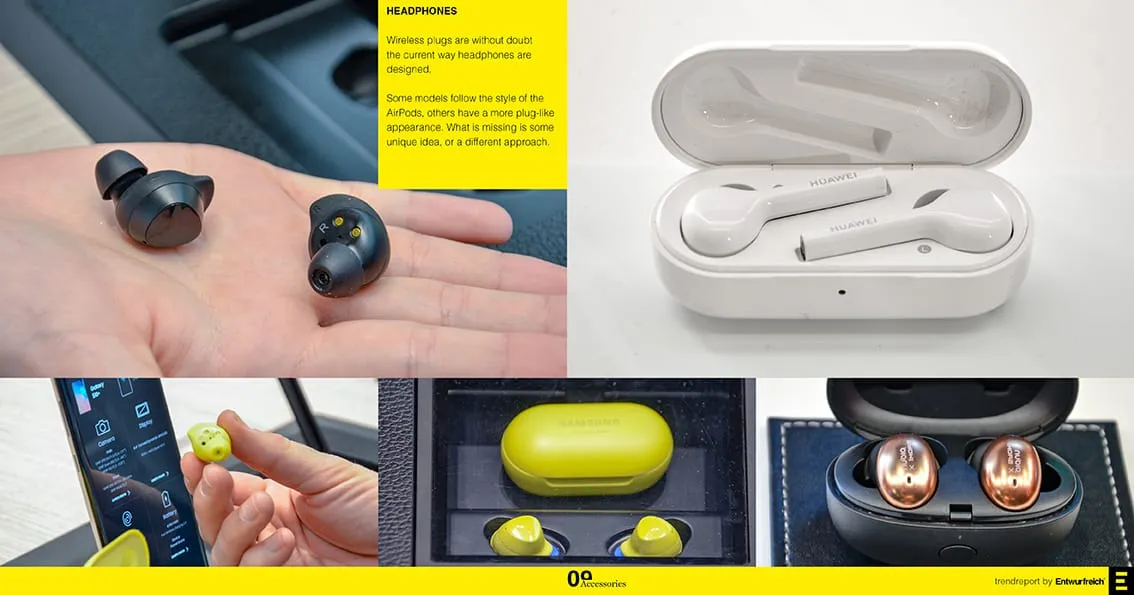
Our ZOOM-IN Trendreport captures the visual essence of MWC 2019. It covers all eight exhibition halls at Fira Gran Via. These range from device showcases in Halls 3 and 5 to network infrastructure demos in Hall 2 and the 4YFN startup area. Below is a preview with trend analyses and over 70 original photographs. It also includes annotated product highlights from more than 25 exhibitors, plus the full interviews with Mastercard, Wiko, Boni and Oppo.
Why It Matters for Product Design
The trends from MWC 2019 reach far beyond the smartphone industry. 5G enables new product categories in healthcare, logistics and manufacturing. Foldable displays challenge form factor assumptions that have governed device design for a decade. AI-powered cameras change the economics of imaging across industries. At Entwurfreich, we see events like MWC as essential input for our design work. Knowing where mobile technology is heading helps us design connected products that stay relevant as the infrastructure evolves.
Our ZOOM-IN Trendreports turn these observations into actionable insights. They serve designers, product managers and decision-makers. Each report combines on-site photography, expert interviews and trend analysis in a compact format. It cuts through the noise of a trade fair with thousands of exhibitors. Whether you are developing a new connected device or adding mobile technology to an existing product line, understanding mobile ecosystem trends gives you a clear competitive edge.
How These Trends Have Evolved Since 2019
Editor's note (2025): Looking back, MWC 2019 was when the mobile industry crossed several critical thresholds at once.
5G: Networks now cover most urban areas in Europe, North America and East Asia. The infrastructure promised on stage in Barcelona is everyday reality for hundreds of millions of users.
Foldable displays: These matured from fragile first-generation devices into a mainstream category. Samsung, Google and Motorola all offer foldable models at accessible prices — far below the $1,980+ of 2019.
AI cameras: Computational photography is now the default. Even budget smartphones deliver results that would have needed a dedicated camera in 2019.
AR/VR: Enterprise applications have found their footing. Apple's Vision Pro has reignited consumer interest in spatial computing.
Mobile payments: Now the norm in many markets. Biometric authentication has replaced PINs across banking and transport.
What started as trade fair announcements in Barcelona has reshaped how we design, build and use connected products. Entwurfreich continues to track these developments through our ZOOM-IN reports. We also do so through hands-on project work across sectors including smart textiles, consumer electronics and sustainable design.
Selected Projects
Frequently Asked Questions
What is MWC Barcelona?
MWC (Mobile World Congress) is the world's largest trade fair for the mobile and telecom industry. The GSMA organises it each year at the Fira Gran Via in Barcelona, Spain. It brings together device makers, network operators, chipset companies, software developers and content providers from around the globe. In 2019, MWC attracted over 109,000 attendees from 198 countries. There were more than 2,400 exhibitors. Over 55% of visitors held senior-level roles (source: GSMA). It is the most important venue for announcing new mobile products, network technologies and industry partnerships.
What were the main trends at MWC 2019?
Five key trends stood out at MWC 2019. (1) 5G networks and devices launched commercially. Operators announced rollout timelines and manufacturers showed 5G-capable smartphones. (2) Foldable displays arrived, led by the Samsung Galaxy Fold and Huawei Mate X. They brought the first real smartphone form factor disruption in a decade. (3) AI-powered computational photography advanced with real-time scene recognition, night mode and Oppo's 10x hybrid zoom. (4) Mobile AR and VR grew, including Microsoft's HoloLens 2 and standalone headsets on Qualcomm's XR platform. (5) Mobile payments and biometric authentication expanded. Mastercard showed fingerprint-enabled payment cards. These trends have since become mainstream technologies.
Who is Entwurfreich?
Entwurfreich is an industrial design agency founded in 2012, based in Düsseldorf, Germany. Over 14 years, the team has completed more than 350 projects for over 125 clients. These include ABB, Vodafone, Henkel, Coca-Cola, Fujifilm and Covestro. The agency's work spans product design, UX/UI design, CMF design and design strategy. Sectors range from consumer electronics to medical devices. Entwurfreich's ZOOM-IN Trendreports capture design trends from leading trade fairs. These include MWC, ISH, BAU, Salone del Mobile and Dutch Design Week. Recent awards include iF Design Award Gold 2024, Red Dot Best of the Best 2024 and German Design Award Gold 2026. Learn more about our design process.
Written by Matthias Menzel · April 2, 2019